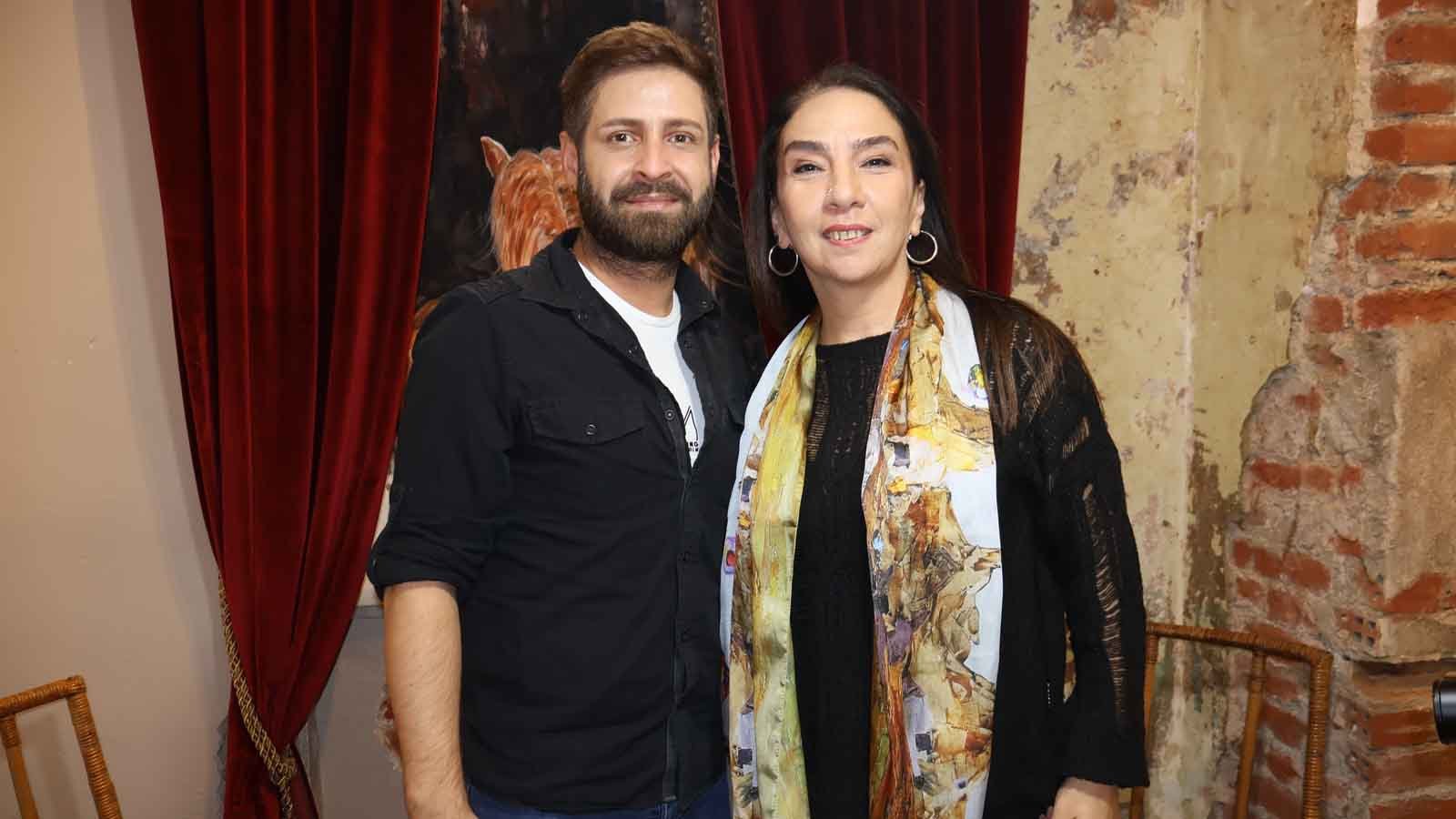
Tibet Ağırtan, one of the pioneering figures of Turkish rock music, meets the audience in the 110th episode of the interview series prepared and hosted by Eylül Aşkın, with a comprehensive conversation held at Ağaçev, one of the cult venues in Kadıköy. Going beyond merely being a musician’s career narrative, the interview offers a profound framework for the intellectual and cultural journey of rock music in Turkey.
In the program, Ağırtan details the emergence process of Mavi Sakal, how the band’s name took shape, and what it meant to produce rock music in Turkey in the late 1980s. The recording processes carried out with limited technical means of that era, the difficulties of concert organizations, and the social perception of rock music are discussed accompanied by personal testimonies.
One of the significant points of the interview is the temporal dimension of Ağırtan’s relationship with music. Emphasizing that long production breaks are not a rupture but rather a maturation process, the artist states that lived experiences are directly reflected in the music. According to him, music is a form of expression that demands depth rather than continuity.
Guided by Eylül Aşkın’s questions, Ağırtan also touches upon his software and engineering background alongside his music career. Questioning the commonly encountered societal understanding of a “life reduced to a single identity,” Ağırtan argues that it is not only possible to produce in multiple fields simultaneously but that it is also creatively nourishing. In this context, the messages he gives to young people are among the inspiring moments of the conversation.
The effects of digitalization on music also form one of the intellectual axes of the program. Noting that the accessibility of recording technologies and digital tools, while facilitating production, also carries the risk of superficiality, Ağırtan expresses that the determining factor is the artist’s intention and aesthetic stance rather than technology.
The anecdotes shared throughout the interview reveal the social transformation of rock music in Turkey. This narrative, spanning from the years when he was stopped on the street due to his long hair to rock music becoming a more visible and accepted culture today, brings together personal memory and social memory.
Tibet Ağırtan with Eylül Aşkın… – Special Interview (Episode 110) offers compelling content for viewers who do not see music as merely consisting of sounds, but who approach it as a realm of thought, expression, and existence.