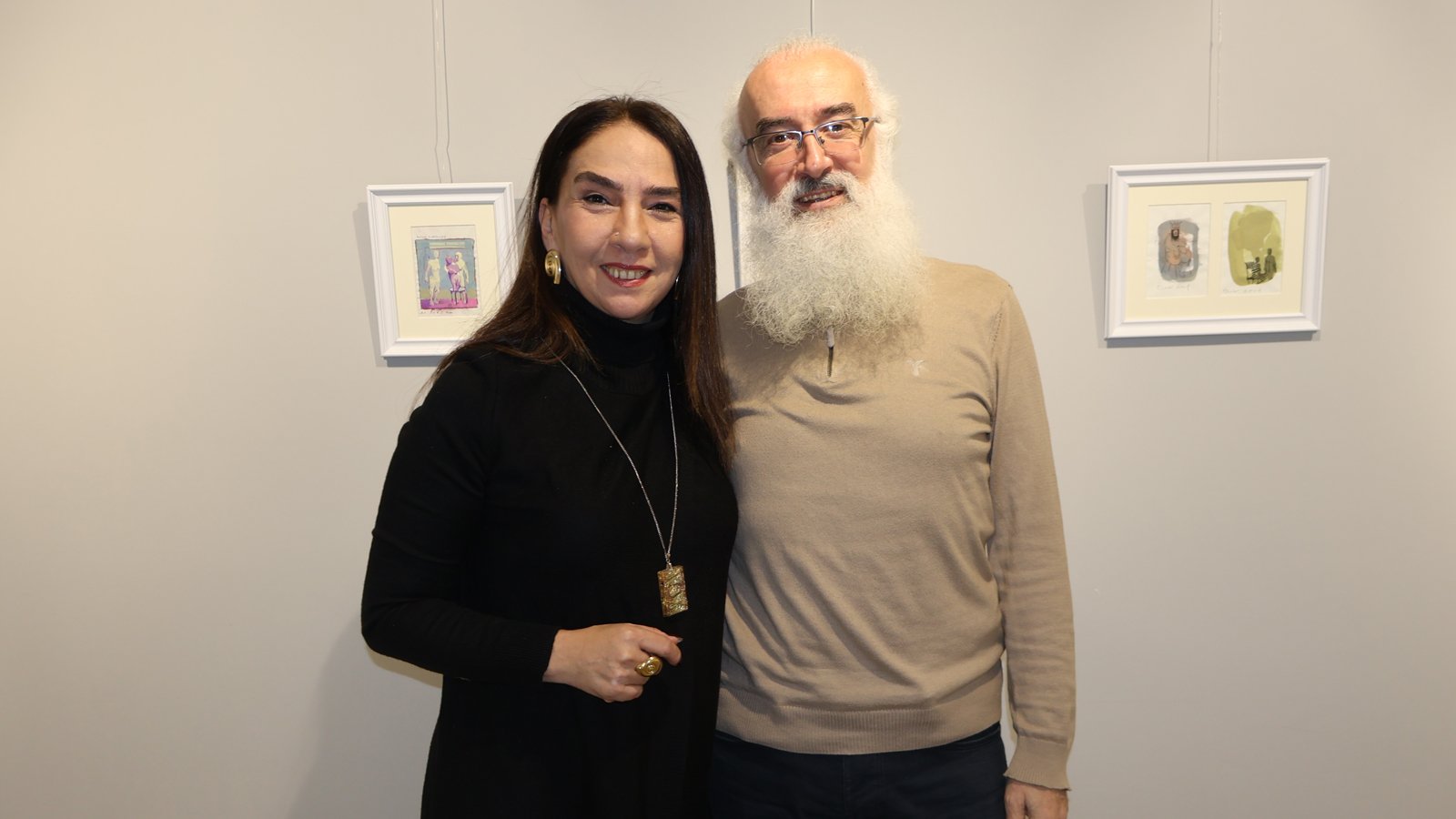
We are with dentist Yavuz İpçi, one of the prominent physicians on our program “Conversations on the Trail of Happiness,” who stands out with his professional experience, hobbies, life energy, and his perspective that touches people. Oral and dental health is directly related to our happiness. We are talking with him first about the general impact of this issue on our health and then its impact on our lives, meaning our happiness.
Dentistry is your family profession. How did you come to specialize in this field?
Yes, I am continuing the family profession. My father, Tekin İpçi, loved this profession very much. He instilled that love in us. We also continue to work, viewing our profession as our hobby at the same time. Me, my older brother, my sibling, my wife, my sibling’s spouse – they are all dentists. My son is currently studying dentistry in France; he will join too. So, we can say dentistry is a family profession for us. I decided to become a dentist at the age of 6, and since then, I have been practicing my profession with love, and as I said, we try to give our patients the most beautiful smile, the best.
Dentistry has truly evolved. Both in terms of equipment used and technology. What would you say comparing now to 20 years ago?
Now, the most important criterion, I think, is that we can access all kinds of information and content through YouTube or Google and gain knowledge. I remember, 40 years ago, my father would wake up on Sundays and try to learn by translating from the French Dentistry Encyclopedia. Of course, lately, updates in dentistry are progressing very rapidly. In our profession, whenever we say “we know this job well,” we start to regress. Therefore, we must always follow the innovations and apply the ones suitable for the patients.
Dental health is directly correlated with happiness, what are your thoughts?
Of course, even if a tiny part of us hurts, our comfort in life, our entire perspective on the world can change instantly. This applies to the whole body. When a part of you hurts, all our life energy drains. But one of the most beautiful symbols of happiness is smiling. We indicate we are happy by smiling. Now, take the beautiful smiles of models in photographs, go over a tooth with a black marker and scribble over part of it. You can see how much that smile worsens and becomes unattractive. Therefore, it’s no coincidence that models display their smiles. You’ve probably never seen a model who is frowning. One of the most beautiful symbols of happiness is laughing. And we try to beautify smiles.
After a certain age, teeth start to cause problems. I wonder what the latest research says about this, and well, which procedures do you perform most often?
Well, the most important criterion for our patients is to take good care. When they come to the dentist every 6 months, we can handle problems while they are small. Of course, not coming to the dentist for a long time and not brushing well causes tooth loss. First of all, I would like to state this: Teeth should not be extracted as much as possible. Extracting a tooth is the easiest. We perform root canal treatment on the tooth, and if only the root remains, we place a pin, which we call a ‘post,’ into this root, build a tooth structure on it with filling material, and then place a crown on top. So, tooth extraction is the last criterion. We must keep the teeth in the mouth as much as possible. But of course, if not well cared for, if there is a crack, decay, or bone loss in the tooth, teeth can become loose and be lost. For that, our best method to replace them is implants. We will give detailed information about them shortly.
When tooth loss occurs after a certain period, it becomes necessary to address this issue. What are the latest developments here? Let me explain a bit about the structure of implants for those who don’t know at all, meaning those who haven’t had to learn until now.
To explain simply, an implant is an artificial tooth root we place in the jawbone. I always explain this using models, perhaps it’s easier to understand. This here is, of course, an enlarged version. We place this into the jawbone. The body accepts it as its own tissue and adheres to the bone, meaning to the implant. We mostly use titanium materials. After waiting for a certain period, mostly, sometimes we can load it immediately, but mostly we wait.
How long do we wait?
We wait for 3 to 6 months. Depending on the bone structure, we attach the upper part onto it, it becomes a tooth, and we can place porcelain on top of that. There are various applications related to implants. For example, let me show this from the model again. Like this, in cases of single tooth missing, we place an artificial root here. After waiting, we place a tooth on top of this root. So, what was done in classical methods? The adjacent teeth were ground down. Enamel is the strongest and most protective layer of the tooth. So, when a tooth is missing like this, the two adjacent teeth were ground down, healthy teeth, and we would make a bridge on them. However, instead of cutting the enamel, we place an implant here and build a tooth on it. Thus, we also protect the adjacent teeth. Or we have patients with no teeth at all in their mouth. For these, we can also place 6 or 8 implants and build a fixed teeth structure on them. Thus, our patients get rid of problems like dentures moving or falling out. There’s another separate topic. For example, our patients use dentures and complain about them moving in their mouth but want to continue using dentures. We can fix these dentures with implants. For instance, we place two implants in the lower jaw. Four in the upper jaw. The denture has corresponding parts that fit into them. When placed, we can achieve teeth that don’t move in the mouth, that they can chew comfortably with, bite an apple with. Also, taste is perceived by the tongue. But there is a taste we call palate taste, related to the crushing of food between the tongue and the palate. Normally, upper dentures cover the palate. In large dentures. When we place implants, we can also open up the inside of the denture. Therefore, we can also make smaller dentures for our patients that don’t move in the mouth.
Actually, these are things that came with developments, right? In the past…
I have been doing implants for 30 years. Of course, there are developments. One disadvantage of implants is the waiting period. With changes in surface structures, we are reducing this waiting period. Trying to reduce it. Just as a baby doesn’t form before 9 months, sometimes our patients have insufficient bone. We place bone graft there and wait 3 to 6 months for the bone to form. Then we do the implant. So, physiology doesn’t always allow us to do immediate implants. Of course, developments are towards doing implants as soon as possible, but often, waiting provides both more guaranteed solutions and allows the bone to form well for longer-term implant use.
Actually, this also becomes a permanent solution for a long life, right?
Well, in medicine, there is never a 100% lifetime guarantee for anything. You have bypass surgery. You don’t know how long your patient will live. Just as our patient must take good care of their teeth, they must take good care of the implant in the same way. There is bone that holds the tooth. If this bone resorbs, the tooth becomes loose and falls out. The same applies to implants. If the patient doesn’t take good care of their teeth and causes bone resorption, they can also lose their implants. Of course, we do implants for them to use for a lifetime, for more than 20 years, but regular check-ups every 6 months, cleaning of tartar, are extremely important criteria. It perhaps becomes even more important. In fact, it becomes even more important for implants, but protecting your own tooth and essentially not losing it, maintenance is very important.
Are there varieties of these? When we go to the dentist, every specialist has their own recommendations.
The patient’s dentist will decide that. I cannot say from here that this brand is good, that brand is bad. There are thousands of implant brands. I prefer the implant brand I have been using for 30 years, which is also in my own mouth. It’s a bit more of a screwless system. When applied correctly, implant is an extremely successful method.
Well, Yavuz Bey, everyone is naturally a bit hesitant about implants. Is there a reason for them to be afraid? How do you reassure them?
Now, there is no need to be afraid of dentists at all anymore. Just as you feel no pain when a tooth is extracted if properly anesthetized, we are taking something out from the bone there. In implants, we are placing something into the bone. They feel no pain, no ache whatsoever. For a few days, depending on the bone condition, there might be swelling on their face, but other than that, just like in fillings, root canals, gum surgeries, no pain is felt in implants either, no need to be afraid. We do have patients who are afraid, and we reassure them by saying, “I have them too,” or we have surely done it for someone they know. They can ask them. Afterwards, they react by saying, “Was this what I was afraid of? I wish I had done it earlier.” Therefore, our patients need not be afraid at all.
Also, some people postpone this procedure both because they are afraid and because it is an expensive procedure, and they end up with missing teeth. So, they don’t go through with completing it. In fact, it even becomes comfortable for them after a while if it’s in a not very visible spot, and they develop an attitude like “I’ll just stay like this.” Actually, this is a very wrong attitude, isn’t it?
Absolutely. Now, after a patient loses their teeth, just like when your arm is in a cast and it atrophies when not used, similarly, when a tooth is extracted, the jawbone there also starts to resorb. Because it’s not functioning due to the chewing action. Therefore, placing an implant there as soon as possible also protects the jawbone. If that area remains empty for years, teeth lean on each other like a fence. If there is a gap, both the adjacent teeth and the teeth above or below try to fill that gap. And when those teeth shift, it becomes harder to clean and chewing problems arise. But as you said, the patient gets used to it after a while. When they get used to it, we do guide them to a certain extent, saying “let’s place an implant here, so your teeth don’t shift.” We definitely explain this to our patients both verbally and visually when they are seated, but of course, it’s not very possible for us to insist too much here. If the patient is conscious, values their teeth, we immediately complete the gaps with implants after tooth loss.
Well, from an aesthetic perspective, can missing teeth cause sagging in the face?
It causes resorption in the jawbone, but for example, if a patient has no teeth at all, especially if those front teeth are missing, the jawbone resorbs, and especially the upper jawbone resorbs backwards. The lower jaw remains a bit more forward. If the patient doesn’t complete them a while after losing their teeth, many problems like resorption in the jawbone, joint problems, shifting of teeth arise. Joint problems, meaning the jaw shifts due to chewing problems, teeth are pressed, and more load is placed on the patient’s jaw joint. Therefore, there is a disc in the joints, like a meniscus, in between. Over time, wear and tear on this disc requires treatments that are much more difficult and expensive to solve. Implants are, of course, not an inexpensive application.
Yes, and shifting happens even if the teeth are complete, I think.
With advanced age, teeth move forward and start to crowd even if they weren’t like that before. Especially if wisdom teeth weren’t extracted, sometimes they can push and cause shifting. Just as bone resorption occurs in gum disease, after a while, there is no bone left to hold those teeth. Also, if you look at the jaw, due to gravity, it tends to move forward. When not properly cared for, bone resorption occurs and causes crowding in teeth. Let me point out about crowding while we’re on the topic: As much as possible, we should not cut teeth and place porcelain. Cutting and crowning teeth just because they are crowded is not always the right approach. For this, with clear aligners or orthodontic treatment, fixed orthodontic treatments, we can correct the alignment of the teeth and thus avoid cutting them. We can also do orthodontic treatment at an advanced age. Of course, because the bone structure hardens a bit more, the bone is set, it can take longer and we are more limited. Therefore, coming to the dentist and getting checked at a young age is very important, but we also do orthodontic treatment at an advanced age, of course.
Up to what age can it be done?
As long as they are living, we can do it. Well, let’s not say 80, but depending on the patient’s wishes, we have done orthodontic treatments for our patients who are 50, 60 years old.
Well, Yavuz Bey, meanwhile, another important thing regarding teeth is actually the aesthetic appearance. Because of laminate porcelain applied to all teeth, everyone has pearl-like teeth. This actually existed years ago too, but it was done for very problematic teeth when necessary. What do you think about this? Why has it become so widespread, is it healthy?
The perception of aesthetics changes. My father used to make gold teeth for a while. You know, some thought gold teeth looked very aesthetic, but they don’t. The story we grew up with at home, told by my father for years, is about a young girl who came wanting to have her teeth cut and made protruding, and my father refused to do it for her. So, he was completely against cutting teeth for no reason. We view it the same way. If, of course, our patient cannot smile beautifully and there are major problems with their teeth, we first do orthodontic treatment. We do teeth whitening.
We said the most protective layer of the tooth is the enamel layer. Not damaging this layer is very important. Except for necessary cases, I am extremely against cutting teeth solely for aesthetics. And making teeth completely white, unnatural, refrigerator-colored – if the patient really wants it, it can be done – but it’s a method I mostly don’t apply. As much as possible, in our applications on natural teeth, even correcting crowding by looking at their old teeth, old pictures, the reactions our patients mostly get are “There’s a change in your face, a beauty, something positive. What did you have done?” This is important. “Oh, you had your teeth done” – a smile where the teeth are very prominent is not a method we prefer much. Of course, the patient’s desire and criteria are very important, but as much as possible, we guide them with visuals or our applications. Not cutting very white, unnecessary teeth; for example, if two teeth have issues, three teeth have problems. Just making those teeth match the others is one of the methods I prefer. There’s something called smile design that has been around for years. Smile design is extremely popular right now. Like the Hollywood smile, etc. If necessary, we do it, but as I said, I don’t always want all teeth to be cut.
What are the risks?
Brushing well is extremely important. Now, what we call laminate is bonded onto a porcelain tooth. Okay, it bonds very well, is extremely compatible, but if they don’t brush well, it can decay from the edges. There is, of course, a possibility of breakage. It’s low, but of course, there is a possibility of breakage in laminates too. Just as their own tooth can break, a laminate can also break. Breakage is not a problem. But if done properly, meaning not too long, not too big, we don’t often experience breakage in laminates. But, you know, if our patient’s complaints are… if doing gold teeth is no longer fashionable, I think after a while, this trend of making all teeth stark white will also end after a while. But by then, it’s too late, of course. The patient’s teeth have been cut. There’s no going back from that.
I wonder, where are we now with teeth whitening?
In teeth whitening, there are methods we’ve been doing for years. Sometimes there are changes in the gels, but the patient comes to the clinic. After sitting for an hour, we can whiten their teeth and send them off with a white smile. I mostly also recommend at-home whitening for a few days.
Is the laser system used?
Not laser, I don’t use laser. With laser, the relapse is a bit more. We apply gel on the tooth there by giving a light. To explain simply, the process releases oxygen and whitens the enamel layers, the enamel crystals, permanently. We have patients whose color doesn’t return to its original state for 8-9 years, 10 years. Now, after sitting here for an hour, after doing it, we also make a clear tray for home use. We put gel in it and have them wear it for one hour a day for 3 days. Or, if they don’t sit here at all, we have them put gel in this tray and wear it at home for 10-15 days. Of course, staining can occur on teeth. From tea, coffee, cigarettes, etc., staining agents. But when we change the tooth’s basic structure and whiten it, if a stain forms, it forms on a white tooth. When we do cleaning every 6 months, we can mostly achieve permanent whitening for our patients. Thus, we avoid cutting the teeth. Or, the patient wants white teeth. There are wear, cavities on the upper teeth. Porcelain needs to be done, and they want a light color for the porcelain. The lower teeth are healthy, we do whitening. Whatever shade the lower teeth were whitened to, we make the upper teeth match that. Because the upper and lower shouldn’t be different. They must definitely be the same tone. They must be at the same angle, the same naturalness. Whitening is different from regular dental cleaning. In regular cleaning, we remove stains from the surface of the tooth, but in whitening, we can change the basic structure of the tooth and whiten it.
8-9 years is a very assertive number for the duration of whitening…
Yes. But for example, if the patient drinks a lot of coffee, smokes a lot, uses a lot of staining agents, then it can change. If needed after 4-5 years, we can achieve the same whiteness by doing a touch-up at home. We definitely photograph our patients’ before state. We have a scale, our color scale. Fixed scales. We take photos related to that, and then, say, 5 years later, the eye gets used to it. For example, they say “My teeth are returning to their old color.” When we show them the old color, we show the patient how big a difference there is. It’s always in the patient’s records.
Well, Yavuz Bey, let’s move on to oral care from here. How do you see this in your patients? Do you think we can care for our mouths enough?
Unfortunately, oral care is not very good in Turkey. We definitely advise our patients to brush twice a day. I normally prefer medium-hard brushes because, unfortunately, I haven’t seen a patient who cleans properly with a soft brush so far. Just as you can’t clean food residue off a plate with just detergent, no toothpaste alone can clean teeth. Mechanical cleaning is always important. Therefore, we recommend, and often show, our patients to brush from the gum towards the tooth with a medium-hard brush at least twice a day. We explain brushing. We can even see that older patients brush incorrectly. Especially around implants. Therefore, check-ups are important. When we see a problem there, we intervene immediately. Electric brushes can also be used. If the patient can’t clean well enough, it’s an easier application. They clean with an electric brush. Meanwhile, dental floss is a must, and for our patients with significant gum recession, I often recommend interdental brushes. Because just like you can’t clean between the fins of a radiator, it is very important to clean those spaces with fine brushes.
Yavuz Bey, you also have very colorful hobbies. Could you briefly talk about them?
We have a ’74 model car left from my father. We are the first owners. My father was very interested in cars, repairs. We are similarly interested in car repairs. Of course, we have it modified and spend our time, when we have it, on car races, track races. In water sports, again with the interest inherited from my father, we engage in sports like water skiing, sailing when we have time. But as I said, our biggest hobby is our profession. When a new material comes out at fairs, we follow it. In our free time, we try to satisfy our passion for speed on tracks – not on public roads.
You have a very intense pace. You start very early in the morning, right?
We are at the clinic mostly from 7 am. Not keeping our patients waiting is a criterion for us as much as possible. We set aside time for meals, but there can be patients with toothaches, problems, those who come early for their appointment or mix up their appointment, there are times when we direct our time according to them. Therefore, we often don’t even find opportunity to eat. The most important thing is for our patient to leave here happy. That is the most important criterion for us. Our patients may have complaints, problems related to their lives. Them leaving here happy is one of the most important criteria.