Empowering Children for Environmental Sustainability through E-STEM – The EcosySTEM Project is being implemented in Turkey, Greece, Ukraine, and Bulgaria. Through STEM education, children discover the knowledge of nature and are introduced to a vision that seeks scientific solutions to today’s and future environmental problems.
An Educational Movement Spreading from Istanbul to the Black Sea
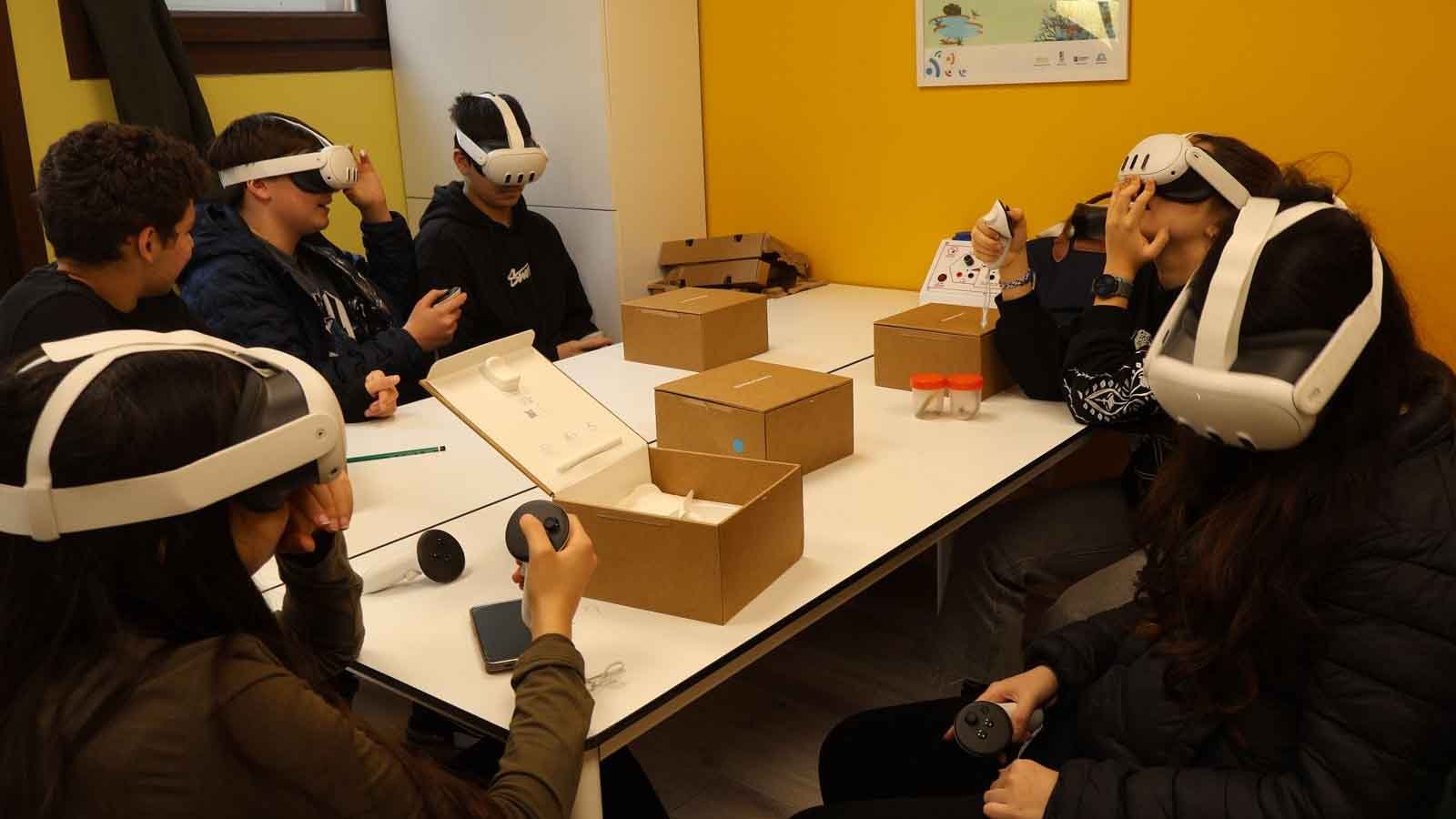
A learning lab in Kadıköy, one of Istanbul’s busiest districts… One day, children are racing solar-powered cars they built on the floor, testing the pH of water samples with kits they prepared, and learning how to grow lettuce without soil using aquaponic systems. Another day, they are creating projects from recycled materials and exploring brand-new ecosystems with virtual reality headsets.
This is not an ordinary education center; it is the product of a brand-new approach to environmental education. The EcosySTEM Project, supported by the European Union’s Interreg NEXT Black Sea Basin Programme, is being carried out with the participation of partners from Turkey, Greece, Ukraine, and Bulgaria. Hands-on learning programs that combine science, technology, and creativity are offered to instill environmental awareness in children aged 8-15.
The project is led by the International Development and Environment Association – IDEA Universal from Turkey. The Director of the association and the project, Evrim Aykan, summarizes the work as follows: “We are not just transferring environmental knowledge to children. We are equipping them to be the eco-leaders of their generation; we are enabling them to become individuals who produce, think critically, and protect their communities.”

Shared Responsibility for the Black Sea
Although the Black Sea Basin has rich biodiversity, it faces borderless problems such as deforestation, erosion, and water pollution. The EcosySTEM Project brings the four countries together under a common vision, allowing children to develop creative solutions to these problems.
The pilot implementation, which started in Turkey in July, was also launched simultaneously in Bulgaria, Greece, and Ukraine. The process is supported by cross-border cooperation and common educational materials. Evrim Aykan emphasizes: “Environmental problems do not stop at country borders; solutions should not know borders either. By working together, we are empowering a new generation that sees their region and their future as a common project.”
Environmental Literacy with Six Modules
The program consists of six modules: Ecosystems and Biodiversity, Environment and Water, Environment and Air, Environment and Soil, Environment and Renewable Energy, and Environment and Waste Management.
Children get to know the environment closely through activities that combine experiments, measurement tools, and creativity.
Biodiversity: They discover the living beings around them, learn about ecological dependencies, and experience different habitats with VR headsets.
Water: They analyze water resources with their own test kits and question access to clean water.
Air: They examine air pollution and climate patterns with measurement tools.
Soil: They comprehend the importance of soil through hydroponic experiments, erosion demonstrations, and soil tests.
Renewable Energy: They design and race solar-powered vehicles.
Waste Management: They learn the value of resources through recycling projects and see waste as a design problem.
In Evrim Aykan’s words: “We wanted the modules to reflect both scientific rigor and the children’s imagination. That’s why we combined data collection with creativity. Sometimes they are making an invention using solar energy, sometimes they are setting out to explore the biodiversity in a forest.”

Big Ideas from Little Scientists
Instructors report that children who start the program with simple questions quickly gain the confidence to design their own systems. Children carry what they learn home, sharing it with their siblings, friends, and neighbors. In Aykan’s words: “They are not just learning about nature; they know that they can shape and protect nature.”
Today’s Leaders Too
The EcosySTEM Project is not just an educational initiative; it is also a long-term vision. Through meetings with local education authorities, the aim is to permanently integrate the E-STEM model into the curriculum.
IDEA Universal – EcosySTEM Director Aykan points out that young people are today’s leaders: “If we see children only as future citizens, we postpone urgent solutions. They are already citizens; they are a part of their neighborhoods, their schools, and they prove every day that they are ready to lead. With this project, we remind them that they have the power to shape today. They no longer wait for permission; they try, they do, they learn, and they implement.”