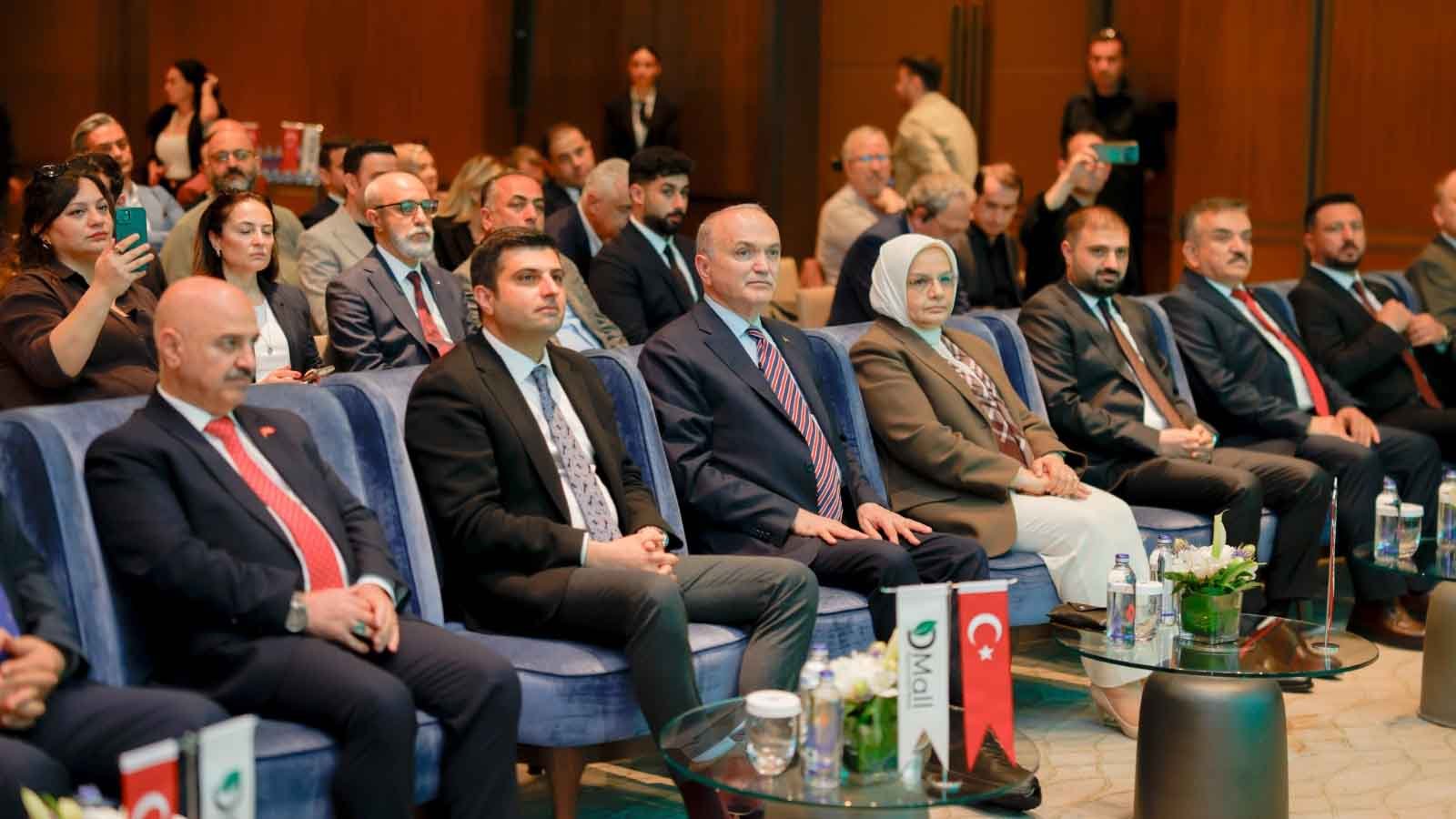
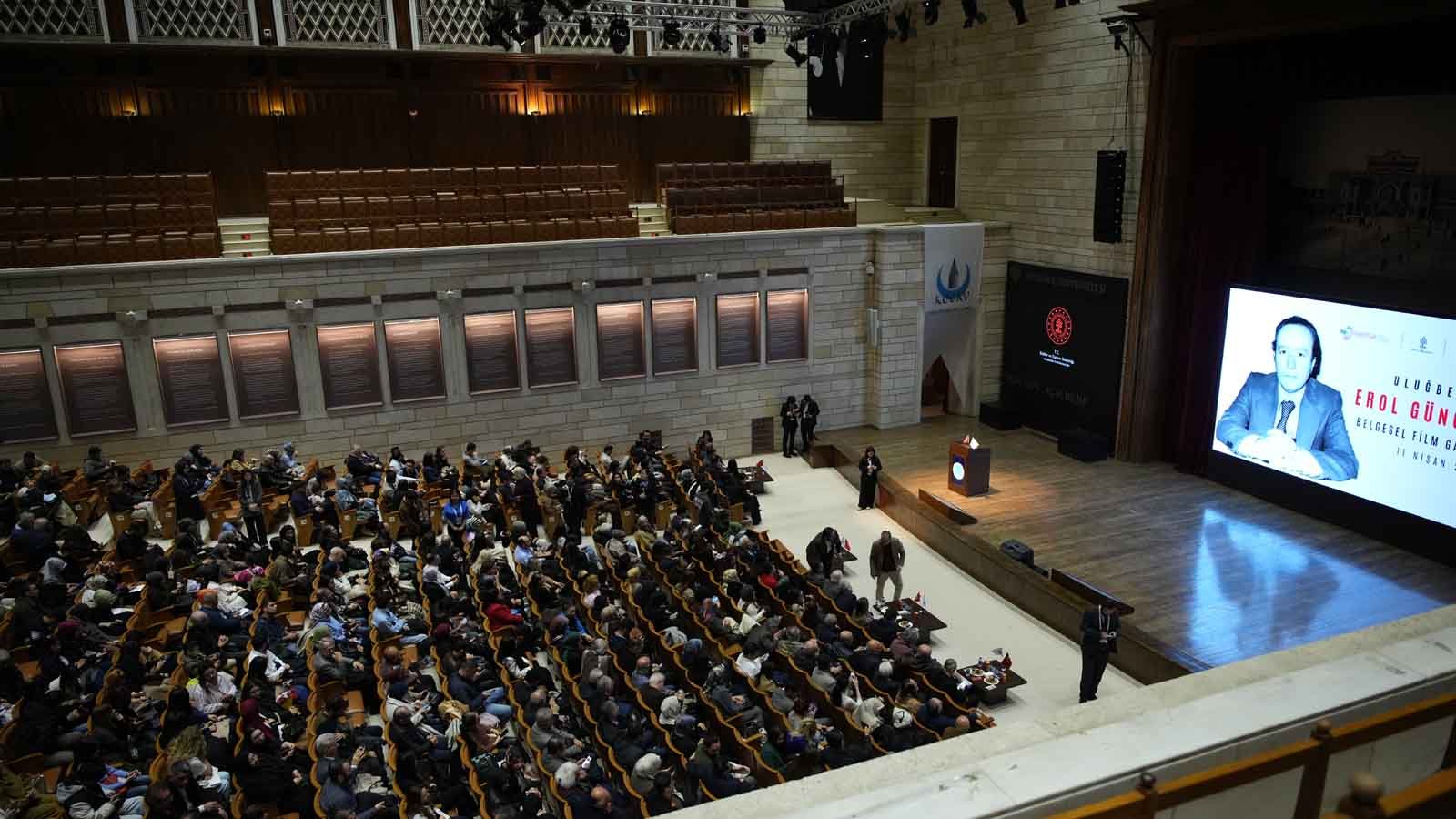
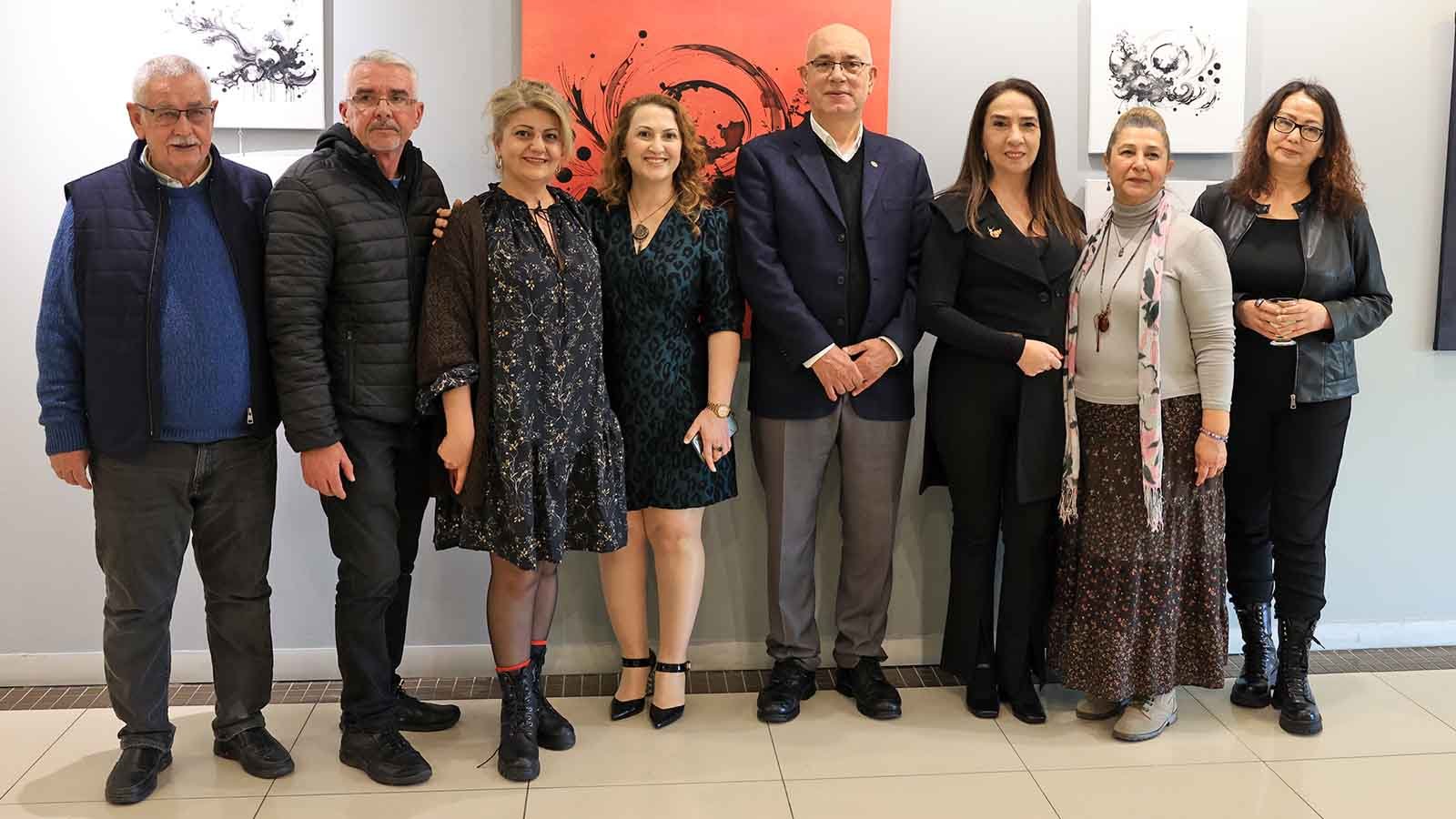
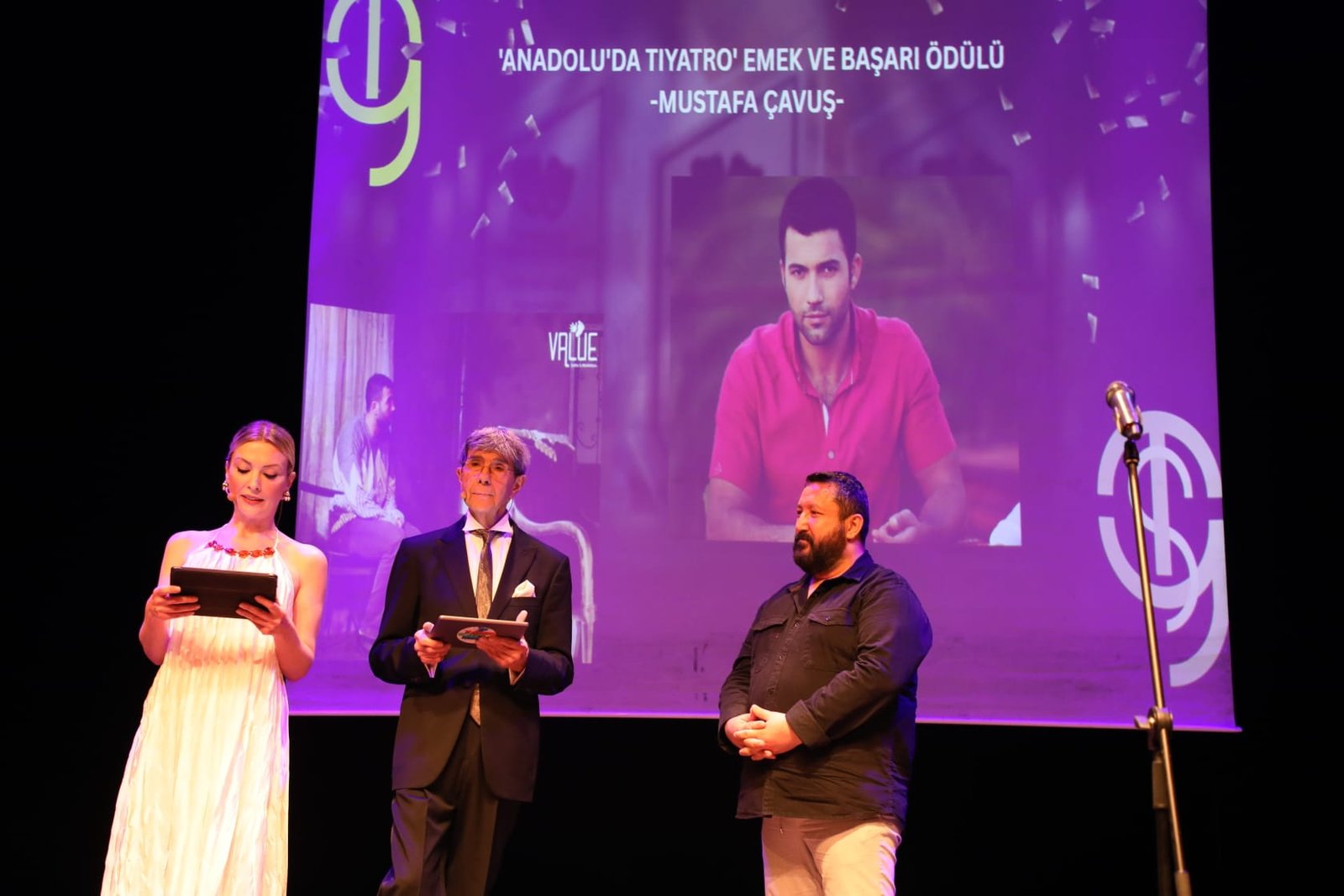
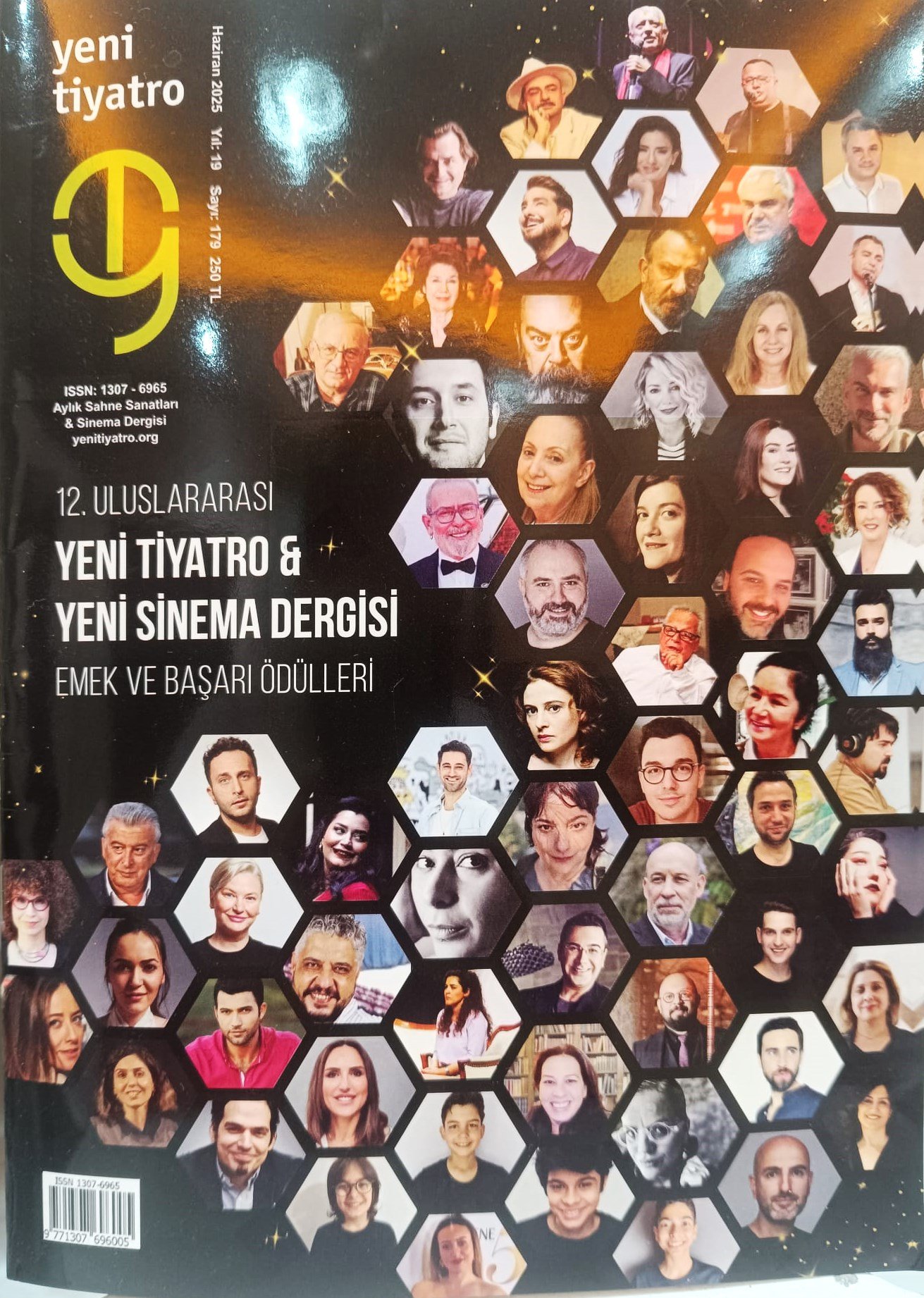
The 12th Labor and Achievement Awards, organized by Yeni Tiyatro & Yeni Sinema Dergileri (New Theater & New Cinema Magazines), honored recipients at a grand ceremony on June 20, 2025, at Istanbul’s Torun Center Grand Stage. Mustafa Çavuş, awarded in the “Theater in Anatolia” category, stood out for igniting the passion for theater in remote regions, mentoring young talents, and amplifying Anatolia’s cultural voice. In his speech, he echoed the struggle of thousands of theater workers: “Theater must thrive not only in big cities but in every corner of Anatolia.” The night also celebrated legends like Atilla Dorsay, Halil Ergün, and Naşit Özcan with “Lifetime Achievement Awards,” while performances by Demet Evgar and musician Tuluğ Tırpan highlighted art’s unifying power.


The Struggle to Expand Theater Across Anatolia
Despite resource constraints and infrastructure gaps, theater in Anatolia persists through local governments and volunteer initiatives. Tiyatro Gazetesi (Theater Newspaper), with over 40 regional branches and 5,000 monthly print copies, spotlights theater activities in Turkey’s remotest areas. For example, Manavgat Municipal Theater’s project “A Barrier-Free Journey to Science,” which brings theater to disabled individuals, won a grand jury prize.
Local founders like Hasan Hüseyin Elmas (Afyonkarahisar) and Ozan Özdemir (Denizli) drive this movement. Hasan Ocakoğlu, awarded a special jury prize in Şanlıurfa for his play Sen Vatan Ben Gurbet (You Homeland, Me Exile), blends traditional narratives with modern techniques. Similarly, municipal theater workshops in Mersin and Kocaeli offer free training to youth.
Central support remains essential for sustainability. Tiyatro Gazetesi’s international awards—spanning Azerbaijan, Cyprus, the Balkans, and Central Asia—position Anatolian theater as a global bridge. As Mustafa Çavuş emphasized: “We always believed we wouldn’t be left without audiences; this award belongs to all Anatolia’s laborers!”
Local Governments’ Evolving Cultural Policies
Municipalities are placing theater at the heart of cultural development with striking projects. Adana Metropolitan Municipal Theater secured a 65th-anniversary special award for institutional excellence, while Efeler Municipality earned a social responsibility award. Manavgat Mayor Dr. Niyazi Nefi Kara, honored with the “Contribution to Turkish Theater Award,” reflects shifting political attitudes toward the arts.
This transformation stems from increased cultural budgets allocated to theater. Figures like Şanlıurfa Mayor Zeynel Abidin Beyazgül and Ayvalık Culture Director Erkan Cilak received “Contribution to Art” awards. New venues (Alanya Rota Art Center, Şanlıurfa BKGM) and festivals (Taylıeli Festival) provide national platforms for local artists.
Yet strategic planning is key for longevity. Models integrating theater with education (e.g., Hakan Özcan’s “Art Education Service Award”) and tourism (Alanya Municipal Theater’s children’s plays)—mirroring Istanbul Metropolitan Municipality’s award-winning “Most Successful Culture Directorate” project—chart the future roadmap.
Post-Pandemic Digitalization and Next-Gen Theater
Theater’s digital shift during the pandemic sparked lasting change. Istanbul Metropolitan Municipality Theaters (İBBŞT) pioneered this with its award-winning “Digital Theater Festival.” Projects like Kocaeli Municipality Theater’s Mesafeli Kabare (Distanced Cabaret) and State Theaters’ Kamyon Tiyatro (Truck Theater) became symbols of creative adaptation, earning pandemic-specific awards.
Technology also enriches aesthetics: mapping techniques in Şanlıurfa’s Sen Vatan Ben Gurbet (Emrah Aşkın) and lighting design in İBBŞT’s Gök Kubbe (Mustafa Türkoğlu) showcase Anatolia’s technical growth. Digital platforms further connect young playwrights with global audiences.
However, digitalization can’t replace live performance. Mustafa Çavuş calls theater in Anatolia “a passion,” stressing the irreplaceable actor-audience bond. Hybrid models (digital promotion + live shows) thus gain traction—e.g., Tiyatro Keyfi’s Kaktüs Çiçeği (Cactus Flower) uses social media to draw local crowds.
Women’s Pioneering Role on the Theater Stage
Female artists fuse theater’s transformative power with social issues. At the 5th Anatolia Theater Awards, the deliberate choice to award all categories to women underscored this mission. Legends like Gülriz Sururi, Suna Keskin, and Zeynep Oral received “Lifetime Achievement Awards,” honoring women’s historic contributions.
Today, projects by female directors and playwrights dominate awards. State Theaters’ initiative “12 Women Playwrights – 12 Women Directors” won “Best Project of the Year,” while Şenay Tanrıvermiş took “Best Writer” for Ev Yapımı Eylem (Homemade Action). Festival directors Arzu Tan Bayraktutan (Bursa) and Sevinç Gediktaş (Adana) also propel women-led works onto international stages.
Yet backstage inequalities persist. Tiyatro Gazetesi’s 2018 “women-themed” awards ceremony—honoring only women as a stance against violence—set a precedent. Current figures like Jale Karabekir (Tiyatro Boyalı Kuş) continue this legacy, winning “Intercultural Theater Platform Awards” for women’s rights-focused projects.
Investing in Young Talent: Theater’s Future
Theater’s continuity hinges on nurturing new generations. The 12th Labor and Achievement Awards spotlighted emerging actors like Ayaz Gülşen and Tarık Sarıyar (“Promising Actor”), while Erdinç Kılıç and Ecem Zaim won “Best Breakthrough Actor.” The “Trailblazing New-Generation Educator Award” similarly mentors young pedagogues.
Academia-art collaborations fuel this ecosystem: Atatürk University’s Stage Arts Department won a 30th-anniversary “Education Special Award,” and Adana Metropolitan Theater’s Hedda Gabler received the Prof. Dr. Özdemir Nutku Production Award. The “Theater of Tomorrow Award” also creates opportunities for directors like Hira Tekindor.
Across Anatolia, local studios and workshops are vital. Samsun’s Karma Sahne (“New-Generation Theater Team” award) and İzmit’s Alternaif Tiyatro (“Contribution to Theater” award) empower youth. Mustafa Çavuş’s drama workshops in village schools similarly bridge children with art.