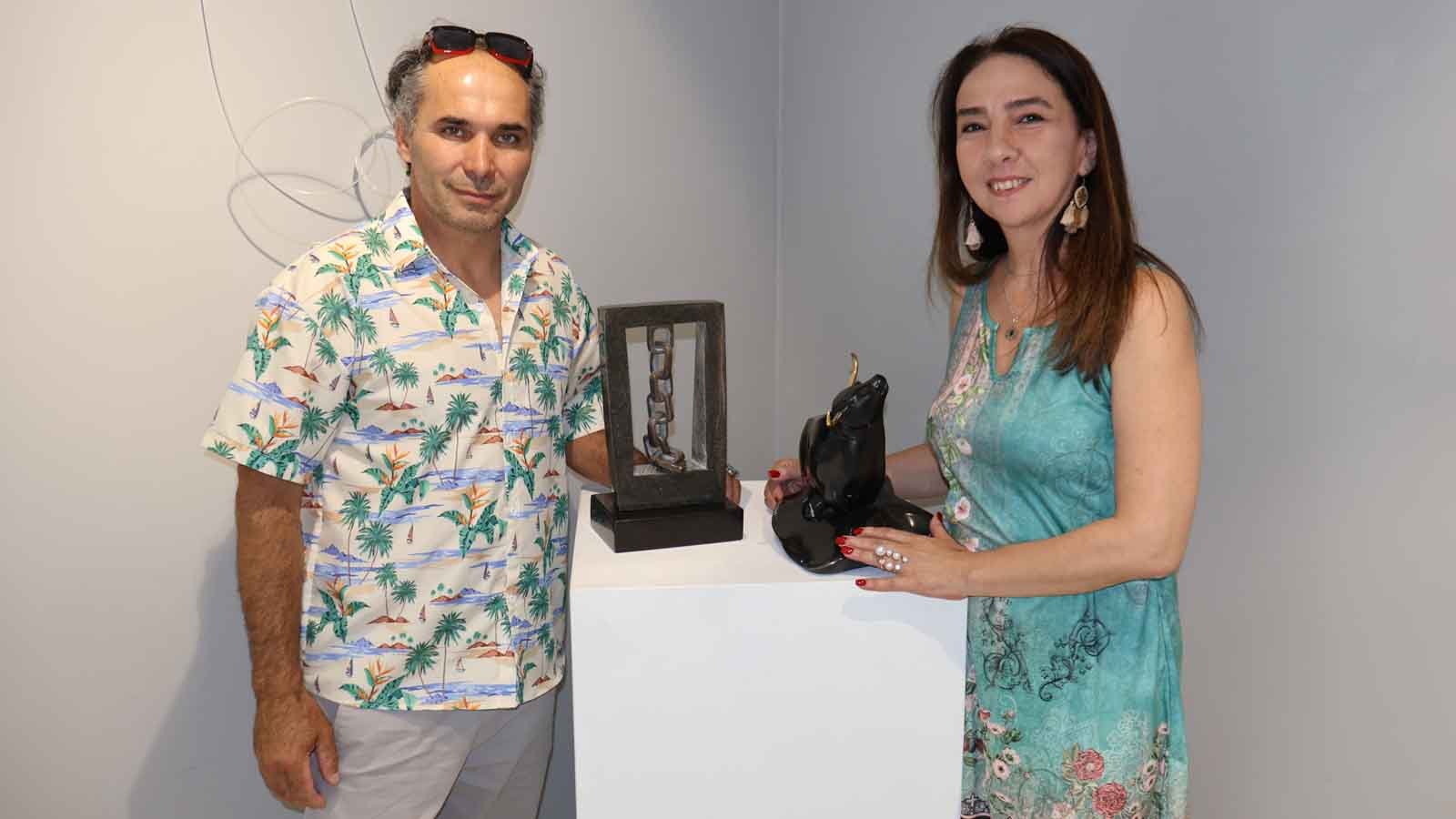
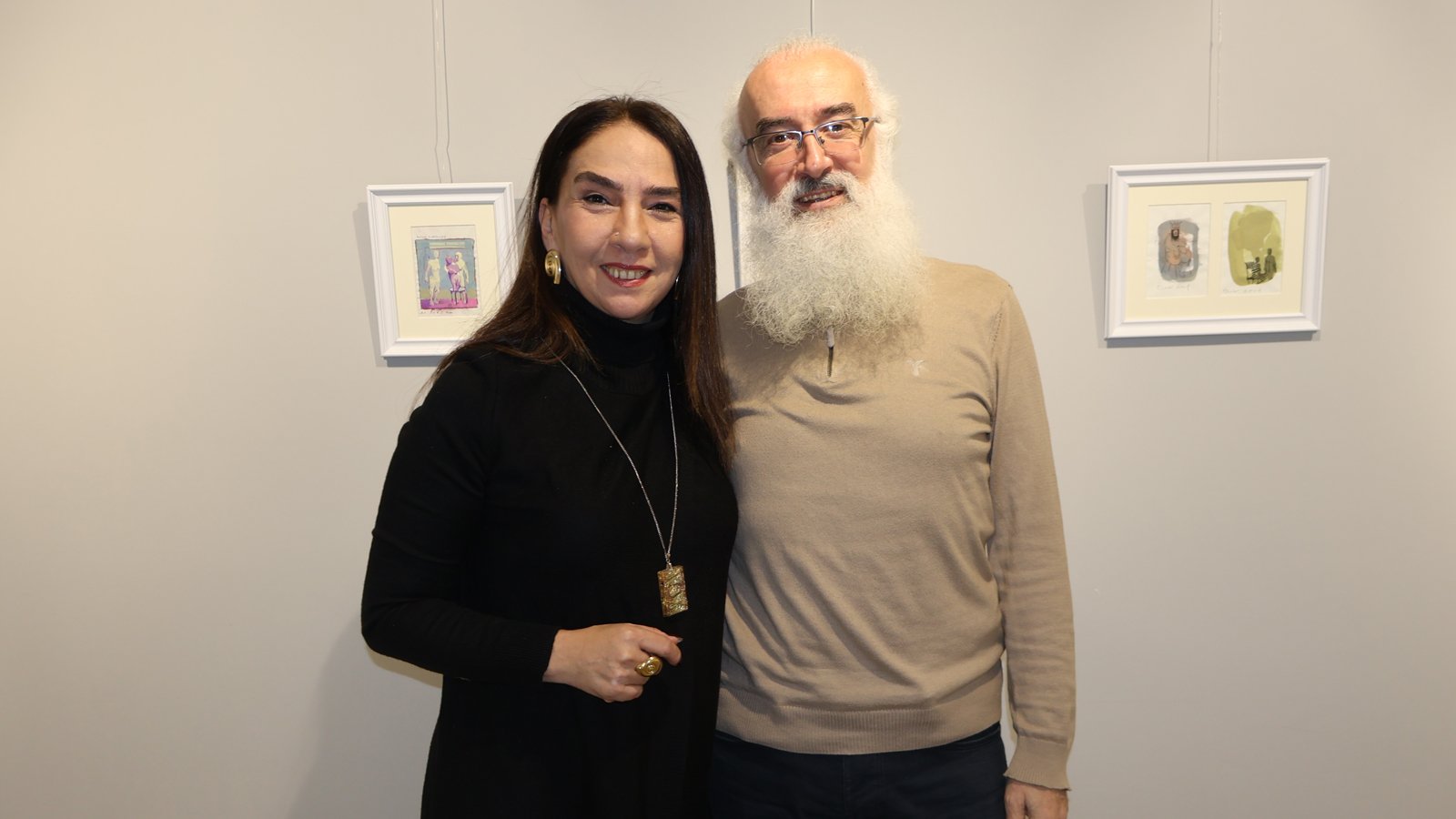
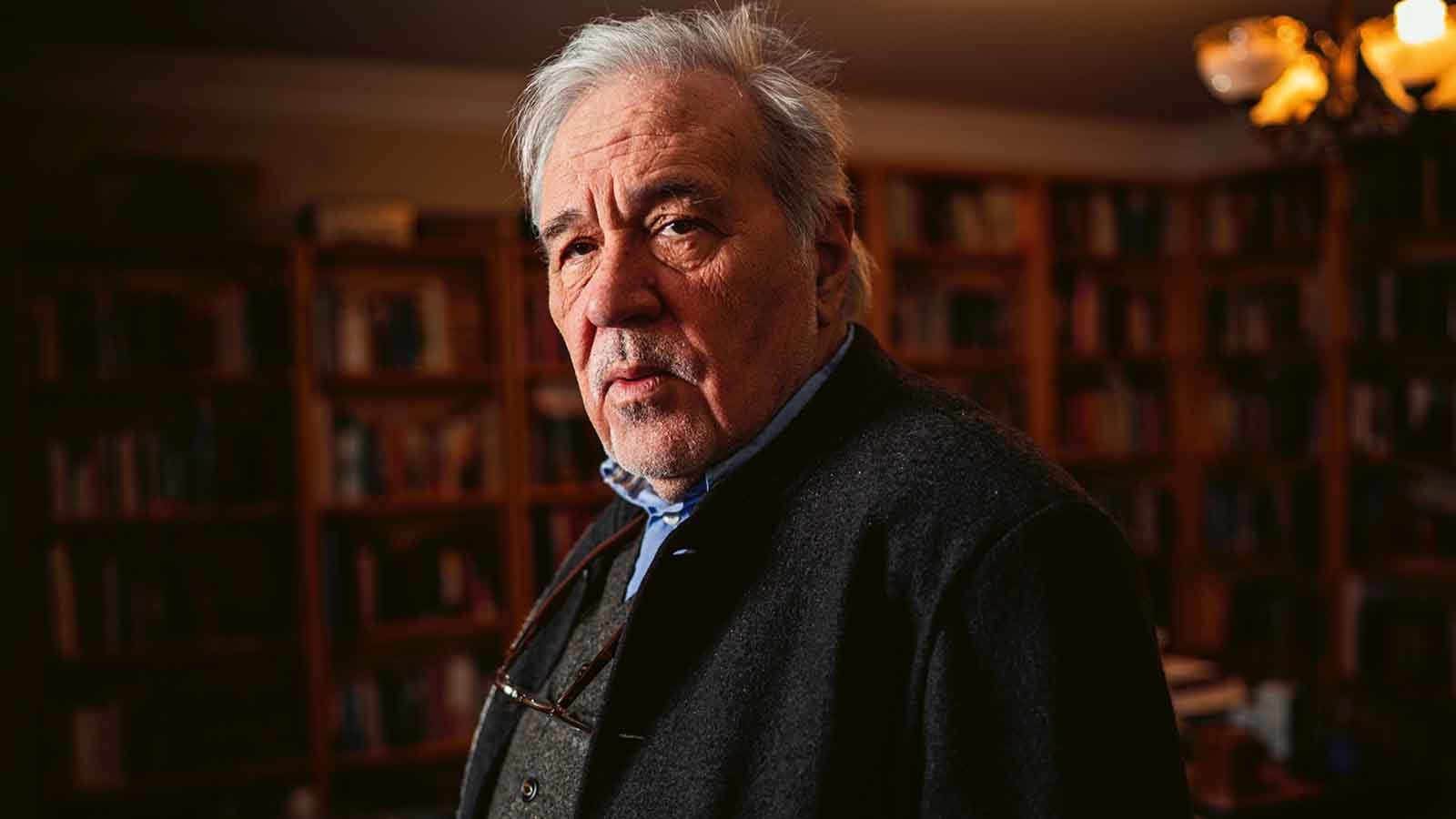
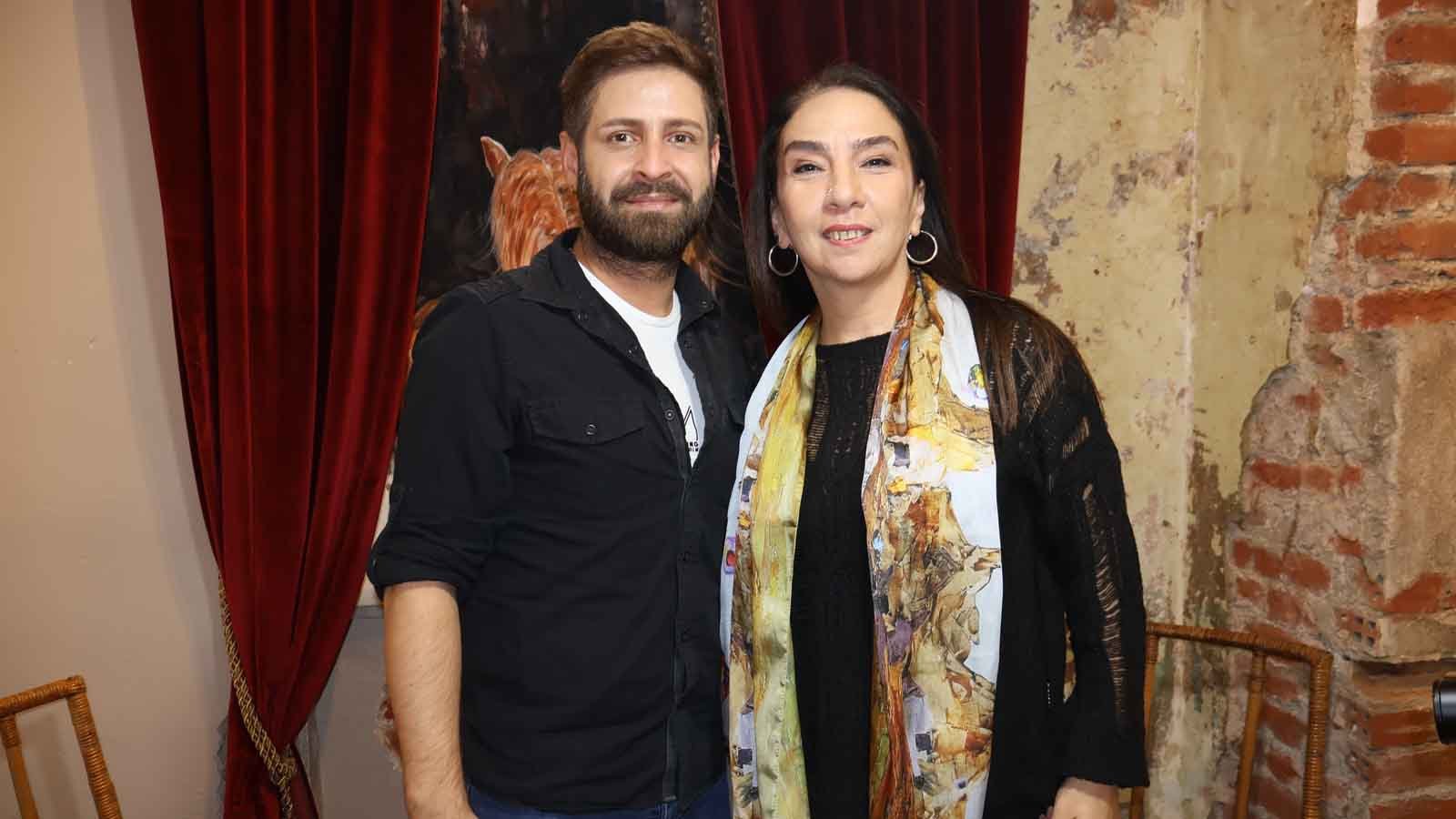
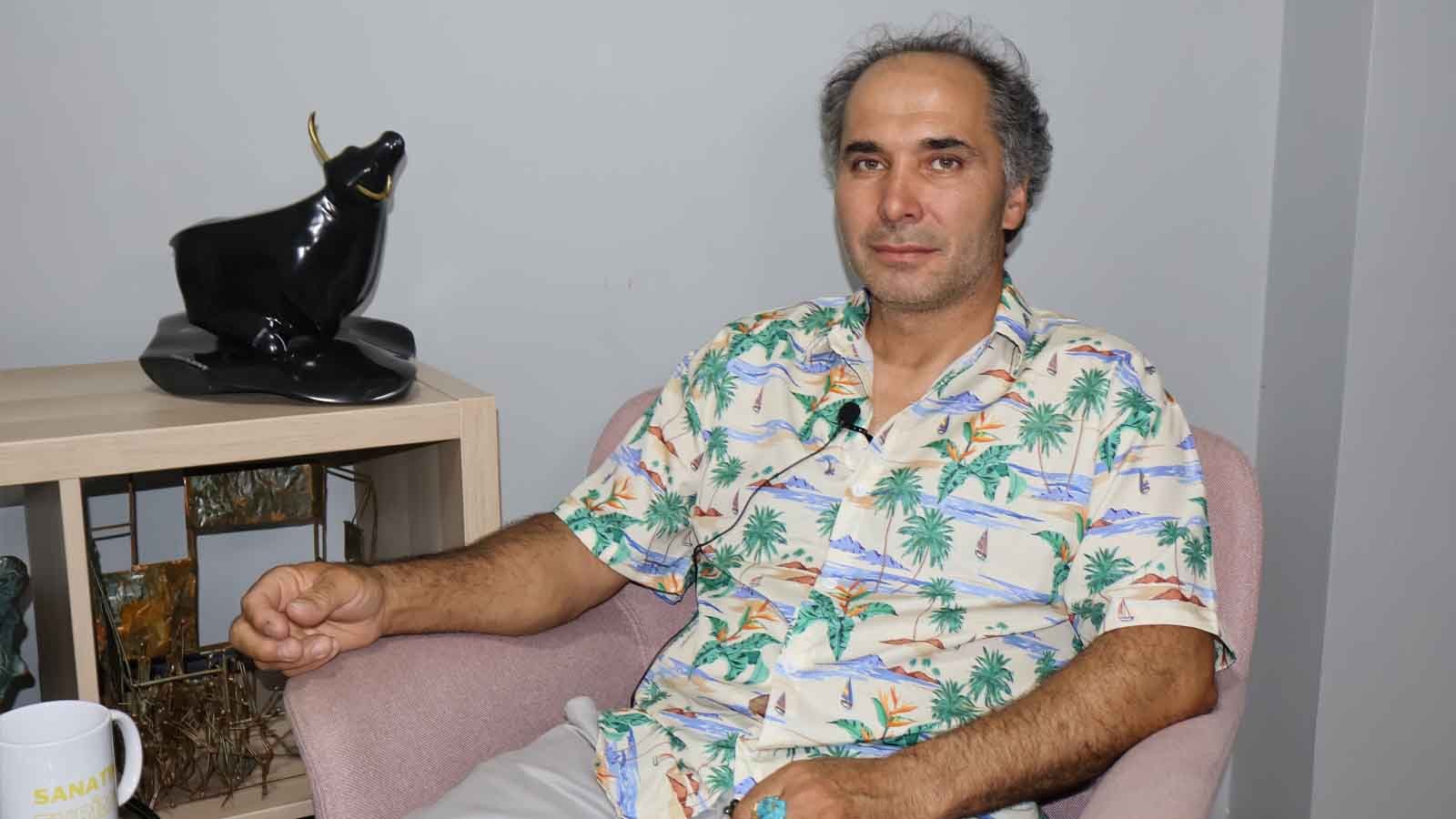
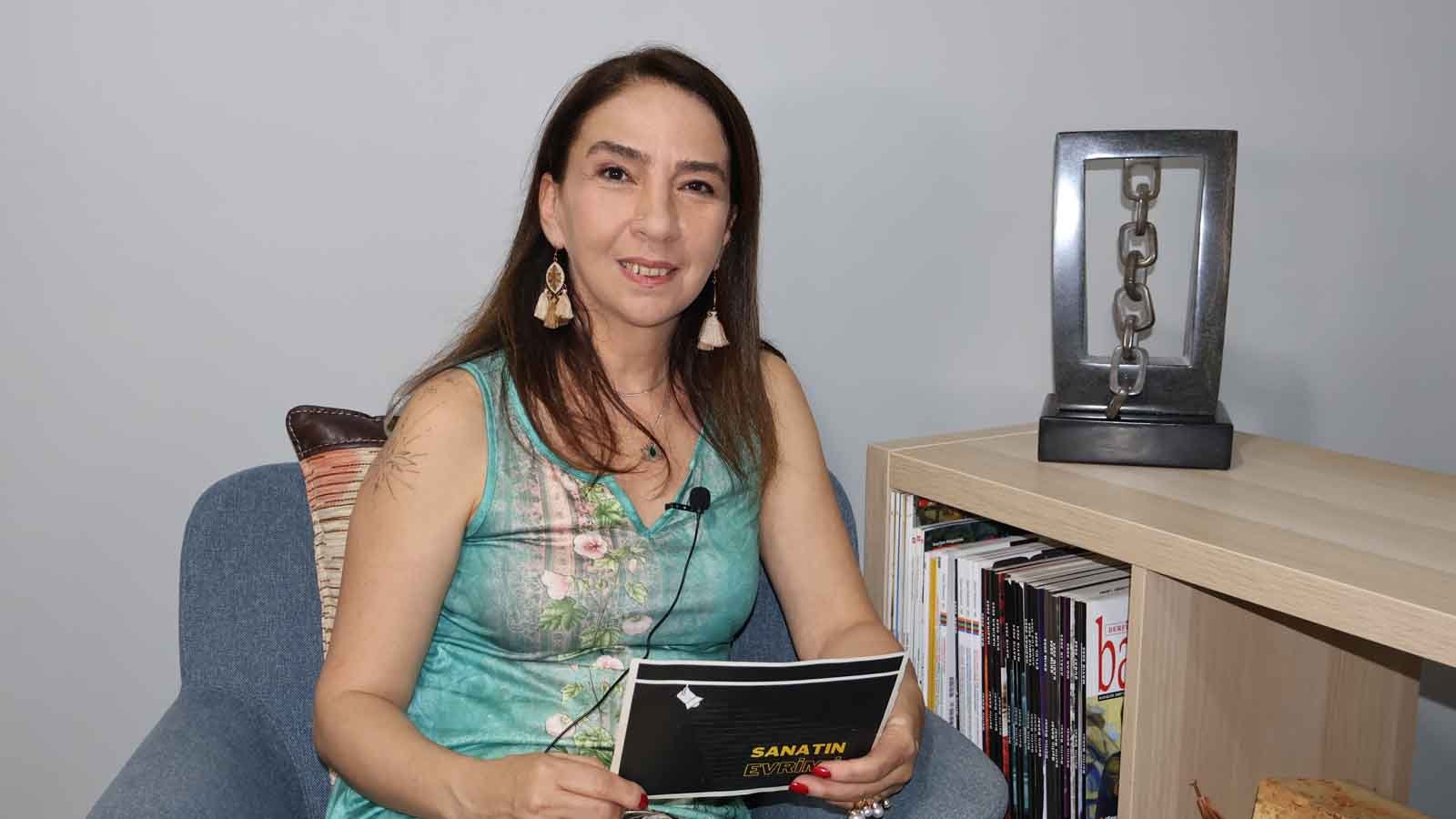
Sculptor Malik Bulut, guest of the 75th episode of the “Evolution of Art” program published in cooperation with Evrim Art and Mikado Communication, shared the details of his art journey with Günsu Saraçoğlu.
Stating that his childhood years intertwined with nature in Silifke shaped his art, Bulut said, “I know the stories of my grandfather going to the parliament to play the violin during the Republican era. I know that my father painted and made music in his own way. But what nourished this was nature. I would always make sculptures with my penknives, soft stones, and tree barks. Without knowing the idea of sculpture, but always in three dimensions, I tried to shape everything I saw in nature.”
Karate Discipline Shaped His Understanding of Form in Sculpture
Explaining that he was seriously involved in karate before his university education, Bulut conveyed the impact of the sport on his sculptural art with these words: “The discipline that the Far Eastern sport gave me and the three dimensions, which contribute greatly to sculpture, I took from that sport. There is something called Kata; you perform defense movements in four directions with your eyes closed, and you finish at the point where you started. This is a three-dimensional imagination. When I started making sculptures, I realized I could think about the back of the sculpture. I achieved 360-degree control.”
Mehmet Aksoy Workshop: The School of Patience and Dedication
After his education at Mersin University, Bulut came to Istanbul in 2000 and worked as an assistant for 4 years alongside master sculptor Mehmet Aksoy, describing this period as a “real school.” Bulut said, “I learned patience there. The master’s 40 years of experience are right in front of you. He says ‘do this,’ and doesn’t care how you will do it. My greatest gain there was that for 4 years, I couldn’t make my own sculpture at all. I kept accumulating, accumulating. After that process ended, I started producing so many sculptures that I now have over 3,000 sculptures.”
“I Work with the Sound of the Stone”
Stating that he uses almost exclusively black serpentine and white marble as materials, Bulut summarized his relationship with the stone as follows: “The thing we call stone forms over a process of 3,000 to 10,000 years. Who are we to stand before such a formation? I break the infinite silence of the stone underground and give it life. Before starting on a large block of stone, I check the stone with a hammer. I can tell from its resonance if there is a vein or a crack inside. If I don’t hear that music, it means the stone is cracked. I work with the sound of the stone. As the sound thins, like a musical note, it becomes more fragile. You cannot proceed without listening to it.”
Sculpture Field and Open-Air Museum Dream in Kumburgaz
Bulut described his “Sculpture Field” project, which he started on an 18-acre plot of land in Kumburgaz, Istanbul. Stating that he dreams of transforming this place into an open-air museum and botanical park over time, Bulut said, “There will be a lavender garden, a sculpture park, a special area for bees, a walnut grove… I imagine something completely ecological, like a nature park, an open-air museum. I’ve been working on it for 10 years, I have about 200 tons of stone there. I need sponsorship, but I’m looking for cooperation that won’t disregard my existence, my formation here.”
Advice to the Young: “If You Don’t Have Passion, Don’t Get Involved”
Addressing young aspiring artists at the end of the program, Malik Bulut advised, “They should follow their dreams, not give up. If they are going to be sculptors, they will work hard, they should anticipate that. And no matter what, they must not be discouraged. With passion; if they don’t have passion, they simply shouldn’t do it. They shouldn’t get involved at all. Because you stay where you left off in this work. You will never stop.”
The Evolution of Art program concluded by inviting the audience to stay with art and love until the next episode.