One should be careful when choosing chocolates. Because some opportunists do not show the same care for the product inside as they do for the colorful, fancy packaging. Tasteless, stale, unhealthy products as well as chocolates approaching their expiration date are being sold as “holiday gifts” with fancy packaging.
Demand is increasing
Elif Aslı Yıldız, the CEO engineer of Patiswiss Chocolate, who pointed out that the demand for chocolate increases during holidays and special occasions, said, “Chocolate has no time, day, or season. Chocolate is always beloved both worldwide and in Turkey. However, sometimes there is an increase in chocolate sales. Holidays and New Year’s Eve are at the forefront of these dates in Turkey. Chocolate sales have skyrocketed recently with the approach of the holiday. It is bought to be consumed during the holiday and people also give it as gifts to their loved ones. Additionally, many institutions also place orders for chocolate as a holiday gift for their employees.”
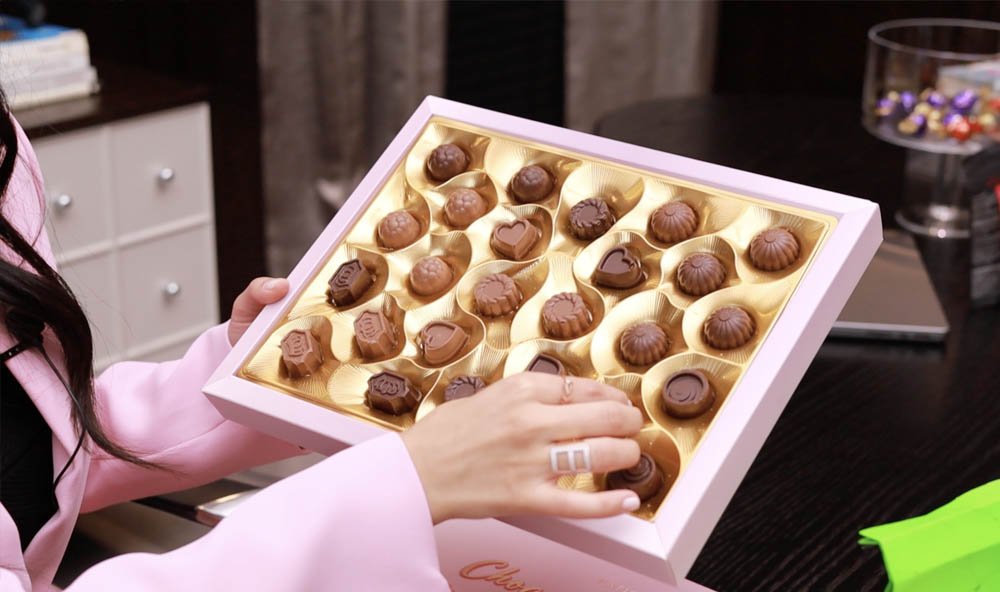
“Beautiful outside, unhealthy inside”
Yıldız, who stated that many brands prepare special packages for holidays, said, “Colorful packages and decorations make the chocolates that catch attention preferred in both individual and corporate gifts. Therefore, many brands have released special products for holiday gifts. Some brands that do not specialize in chocolate also sell holiday products. However, opportunists do not show the same care for the product inside as they do for the packaging. They can choose low-quality, fake chocolates inside a package that is specially made for the holiday. In fact, tasteless, stale, and unhealthy products as well as chocolates approaching their expiration date are being sold with fancy packaging in places that can be called “underground”. Therefore, the manufacturer of the chocolate package should be well-researched, and one should not be deceived by the packaging alone. Because the outside of these products may be beautiful but the inside may be unhealthy.”
It is important to pay attention to chocolates that are not produced in accordance with the Turkish Food Codex, known as “under the stairs”, as they can invite diseases. Experts warn citizens to be careful about products that are much cheaper than they should be and have damaged packaging. Especially those with chronic diseases and those who will do shopping for Ramadan Eid should be careful in their choices. It is recommended that those who will shop for sugar, chocolate, and sweets for Eid should consume healthy and reliable products that comply with Turkish Food Codex and standards instead of low-quality products.
To determine the quality of chocolate, Yıldız explains that one should first look at the ingredients listed on the label when purchasing. The most important thing is definitely the fat. Vegetable oils, palm oils, and non-lauric oils are used instead of cocoa butter. This makes it a very cheap product. The higher the cocoa percentage, the lower the sugar percentage. Real chocolate is the one that melts in your mouth immediately, as cocoa butter is a fat that melts below body temperature, and you can taste all the aromatic oils and cocoa, and the taste of real milk in a milk chocolate.

The Cocoa Percentage Should Be at Least 70%
Cocoa, which is the main component in chocolate, contains a significant amount of fat (as cocoa butter, about 40-50%, approximately 33% oleic acid, 25% palmitic acid, and 33% stearic acid). At the same time, approximately 10% of the dry weight of a whole cocoa bean is composed of polyphenols. Cocoa beans are one of the best-known sources of dietary polyphenols, which contain more phenolic antioxidants than most foods. Three groups of polyphenols can be identified in cocoa beans: Catechins (37%), anthocyanidins (4%), and proanthocyanidins (58%); these flavonoids are the most abundant plant components in cocoa beans. However, the bitterness caused by polyphenols makes unprocessed cocoa beans quite tasteless. Therefore, manufacturers have developed processing techniques to eliminate bitterness. Such processing techniques reduce the polyphenol content up to ten times.