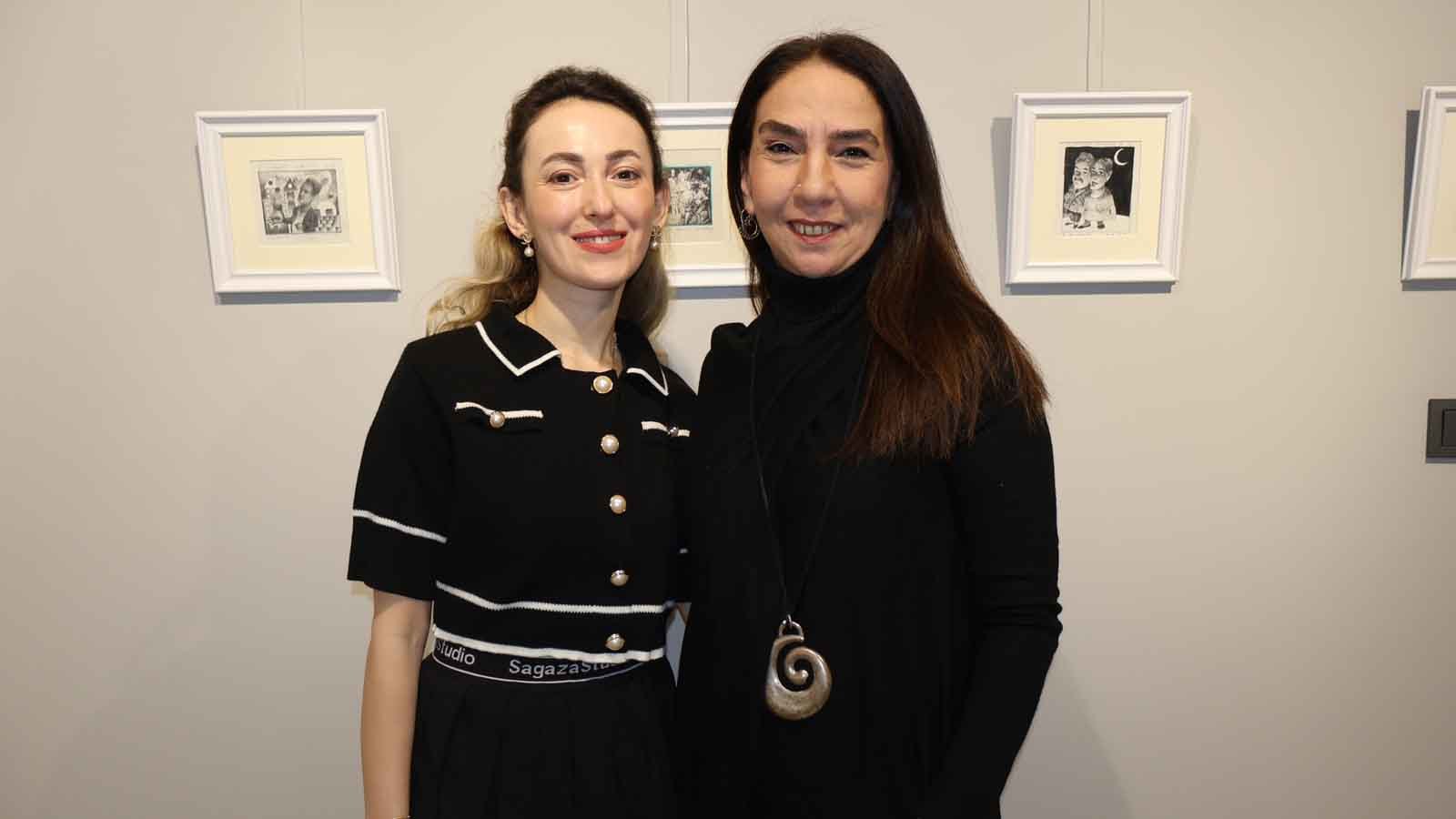
The architect of the payroll outsourcing sector in Türkiye, Ayşe Nazmiye Uça, defined the code of success in her journey—from a macho management culture to the maqam of tanbur, and from family heritage to global business operations—as “consistency” and “integrity.”
“The Greatest Barrier That Must Be Overcome Exists in One’s Own Mind”
Reflecting on whether maintaining a women-focused structure in the business world for 26 years constitutes a challenge to the stronghold of the “macho manager,” Ayşe Nazmiye Uça emphasized that the real barrier lies not outside but within a person’s own mind. Uça stated that she did not grow up with a dominant macho figure in her family, and noted that nearly 50 years ago her mother ran a joint business with her father, with decisions being made equally in the evenings.
Saying that this was not an “exception” but rather “normal” for her, Uça underlined that no mental barrier such as “a woman cannot do this” ever formed in her mind. Asking the question, “If there is no barrier in one’s own mind, who other than oneself can stop them?”, Uça expressed that limits are created not by sectors but by internalized assumptions.
“Joy, Pride, and Belonging Cannot Develop in a Macho Culture”
Stating that macho management culture derives its power not from equality but from pressure and fear, Ayşe Nazmiye Uça said that this system is built on shame and suppression. Emphasizing that creativity cannot flourish in such an environment, Uça noted that joy, pride, and a sense of belonging can only emerge through trust and openness. She explained that she sees the issue not as challenging a fortress, but as demonstrating that the fortress is already mentally unnecessary.

“The Tanbur Rewards Patience, the Business World Rewards Speed”
Describing the place of the tanbur and Burgazada in her life amid intense travel to the United States and Austria and the stress of business, Uça said she sees music not as an escape but as a field of balance. The businesswoman stated that the tanbur demands loyalty rather than haste, and referred to Sadi Shirazi’s words: “What prevents you from finding time to do something may in fact be what you truly desire.” Uça said she realized that what keeps her from the tanbur is not a lack of desire, but a strong calling to build organizations and create fields of work for people.
“Consistency and Integrity: In Management as in Music, the Essential Matter Is Preserving the Essence”
When asked about her management principles, Ayşe Nazmiye Uça said she answers without hesitation: “consistency” and “integrity.” She emphasized that the tanbur is built precisely on these two principles. Noting that the instrument requires working with the same dedication every day and progressing without distorting its sound, Uça said she sees a deep kinship between the business world and the tanbur. Living between Istanbul, Çanakkale, and Vienna, Uça said the tanbur offers her an unchanging center, concluding her remarks with the words: “In both management and music, the real issue is not preserving the rhythm, but preserving the essence.”