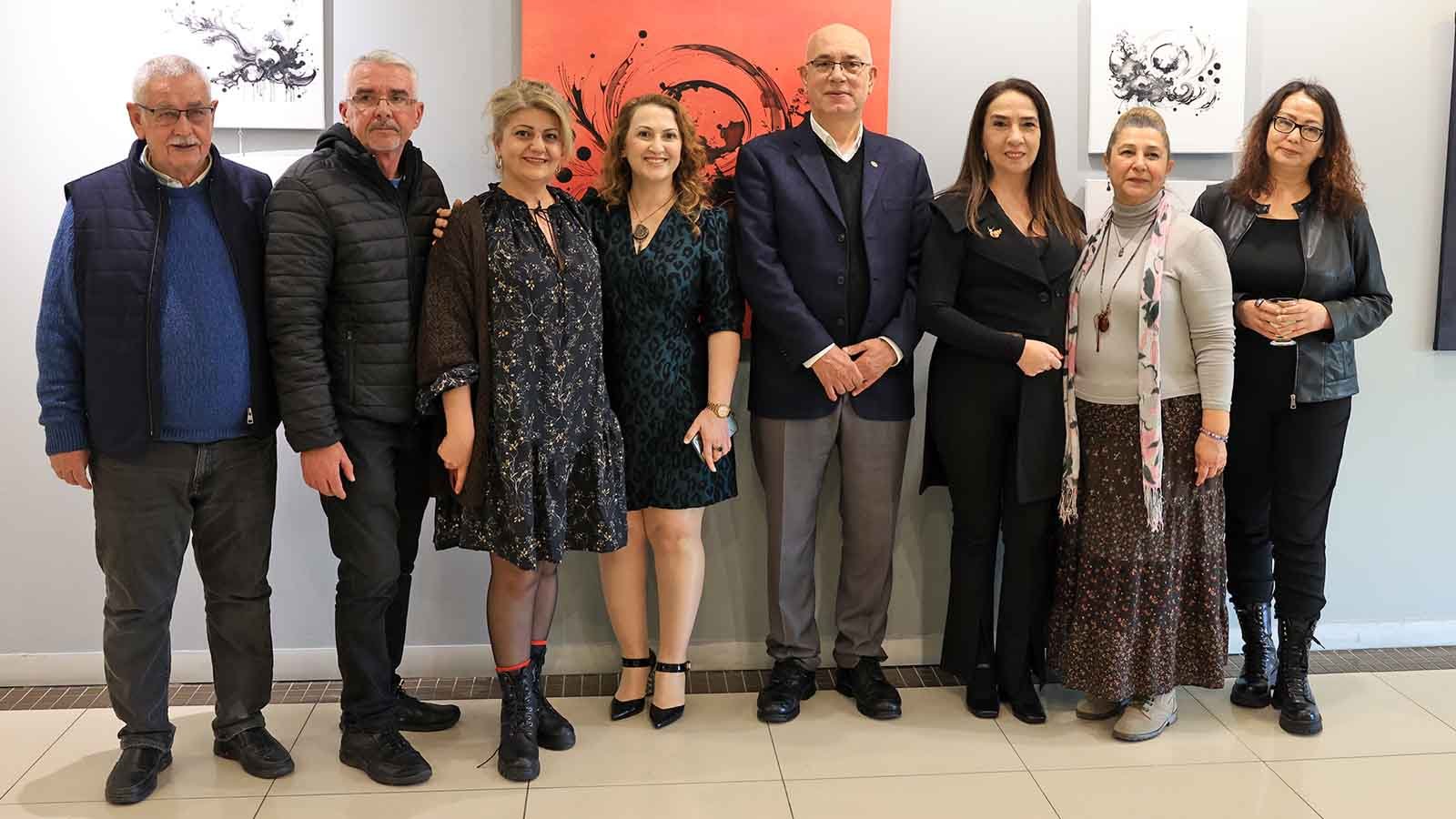
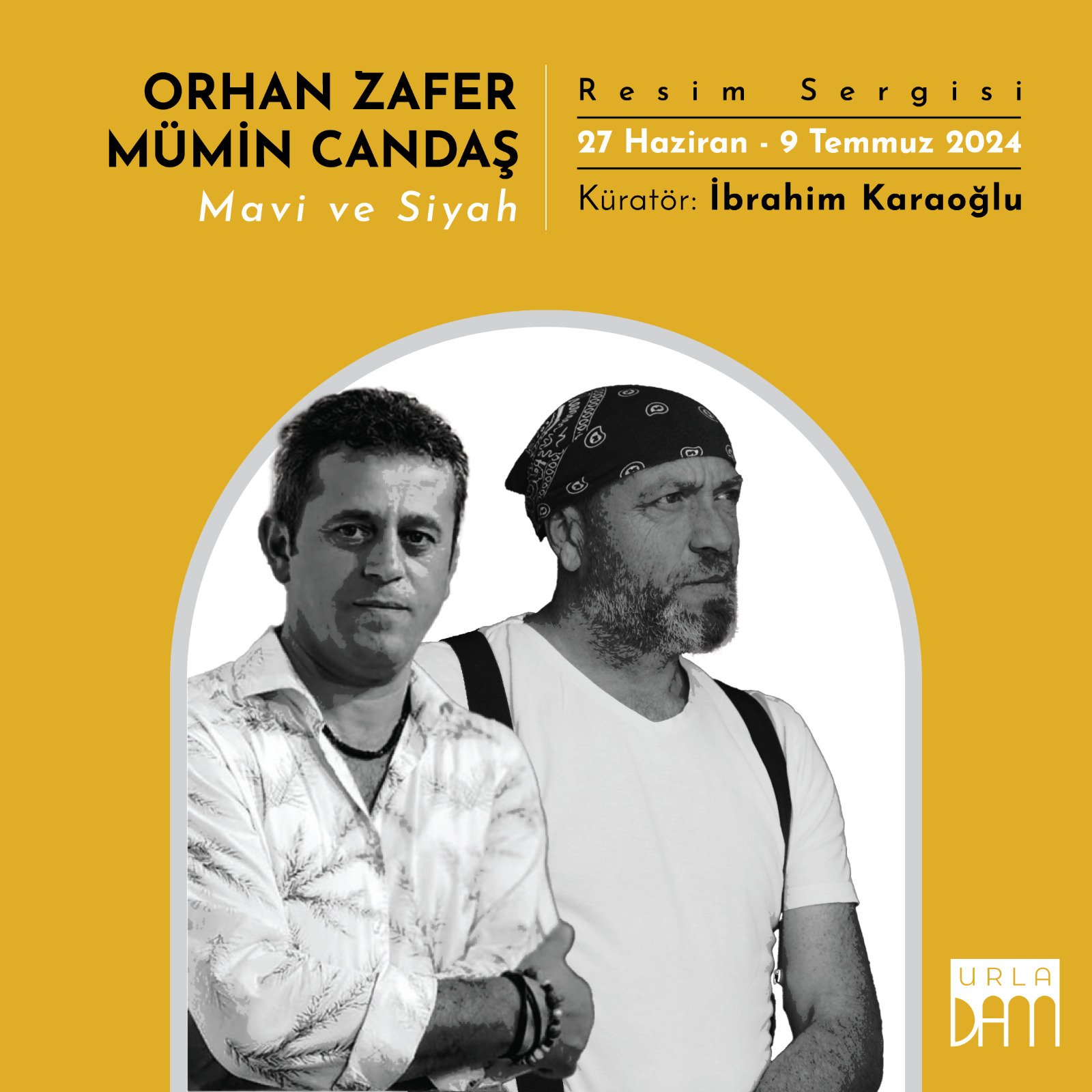
Urladam Art Center hosts the “Blue and Black” exhibition by prominent Turkish contemporary artists Orhan Zafer and Mümin Candaş, opening June 27. Curated by İbrahim Karaoğlu—who describes the show as “two distinct emotional journeys”—the exhibition highlights the artists’ complementary contrasts despite their shared Black Sea origins. Zafer’s introspective blue explorations and Candaş’s black-toned depictions of human-erased landscapes invite viewers to a dialogue running through July 10.
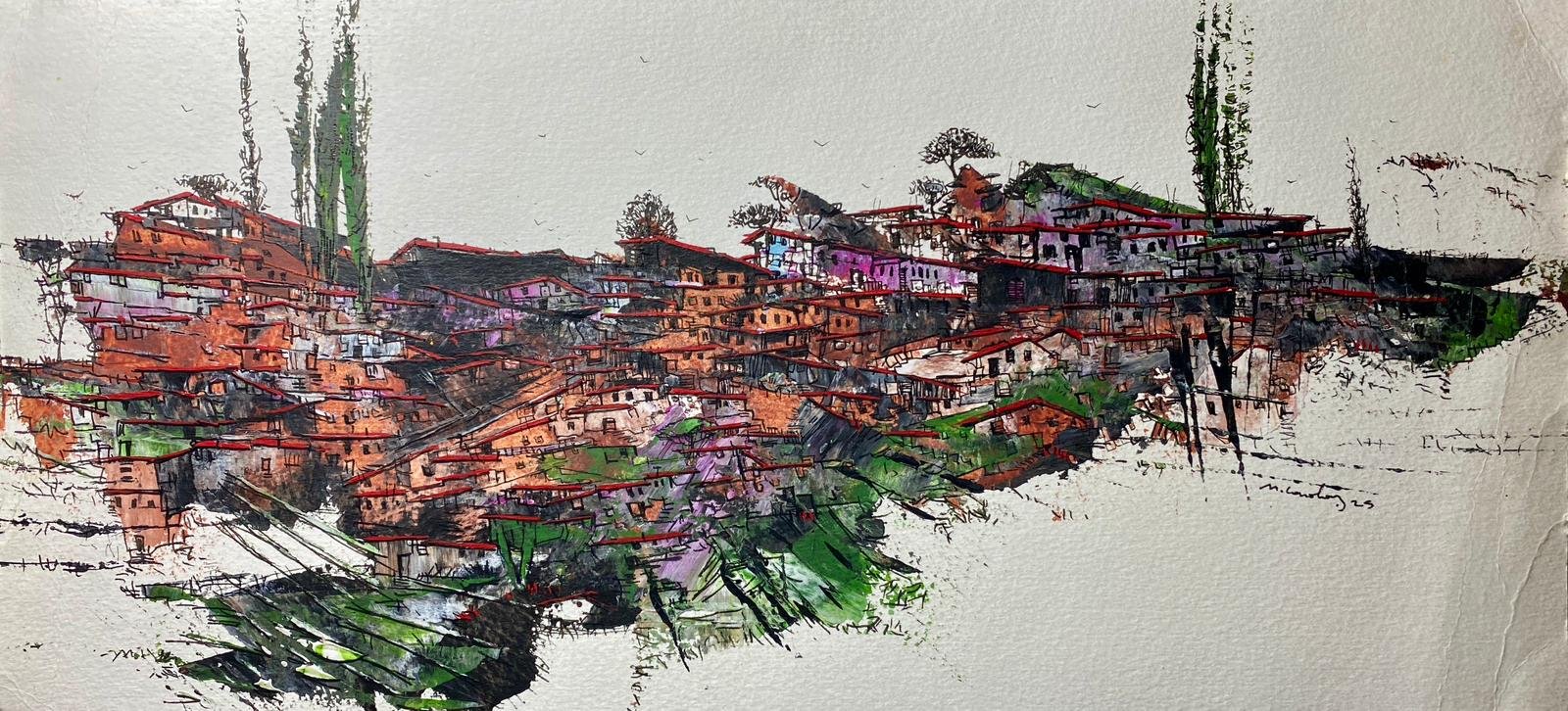
Artistic Roots and Shared Identity
Born in the same year (1971) and region (Trabzon), Zafer and Candaş completed their art education in different Anatolian cities. Zafer graduated from 19 Mayıs University’s Painting Department, while Candaş trained at Karadeniz Technical University. Both blend traditional motifs with contemporary techniques: Zafer transfers folk-cultural colors to canvas, while Candaş reinterprets nature-human relationships through aesthetic lenses.
Their shared identity led to collaboration in the “Arttrio” art group. At their 2016 debut group exhibition in Gaziantep, they emphasized painting as a “communication tool.” Their stylistic differences remain striking—Zafer’s allegorical color language contrasts Candaş’s photo-realistic spatial interrogations.
Philosophy of Colors: Blue and Black
For Orhan Zafer, blue is an identity symbol. He trademarked his signature blue hue as “ozblue-ozmavi,” even producing it as paint. In compositions featuring lighthouses, boats, and abstract figures, he defines the color as “the alphabet of inner journeys,” capturing light’s energy within blue’s depth, as seen in his “Kuşluk Vakti” (Morning Time) exhibition.
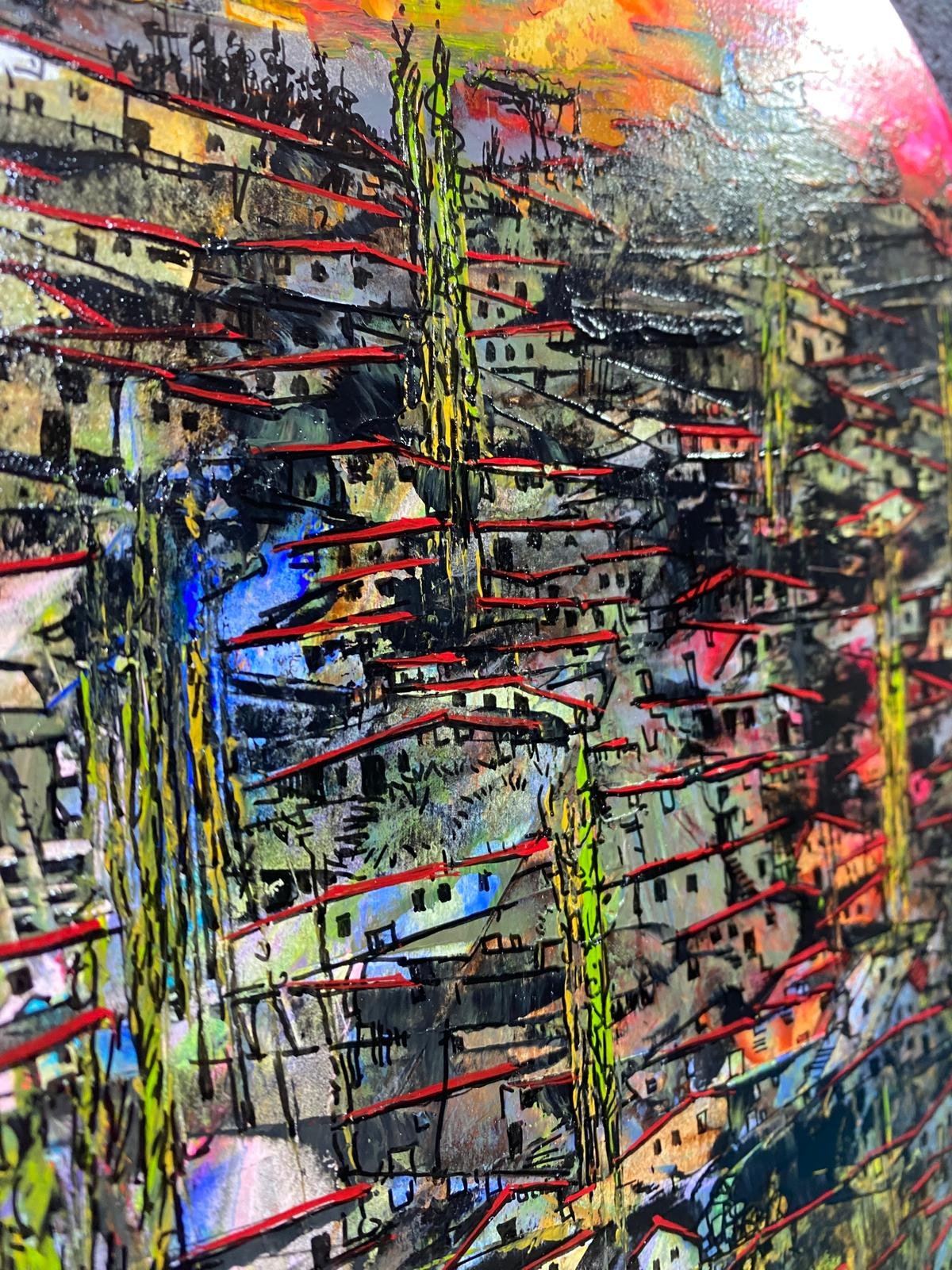
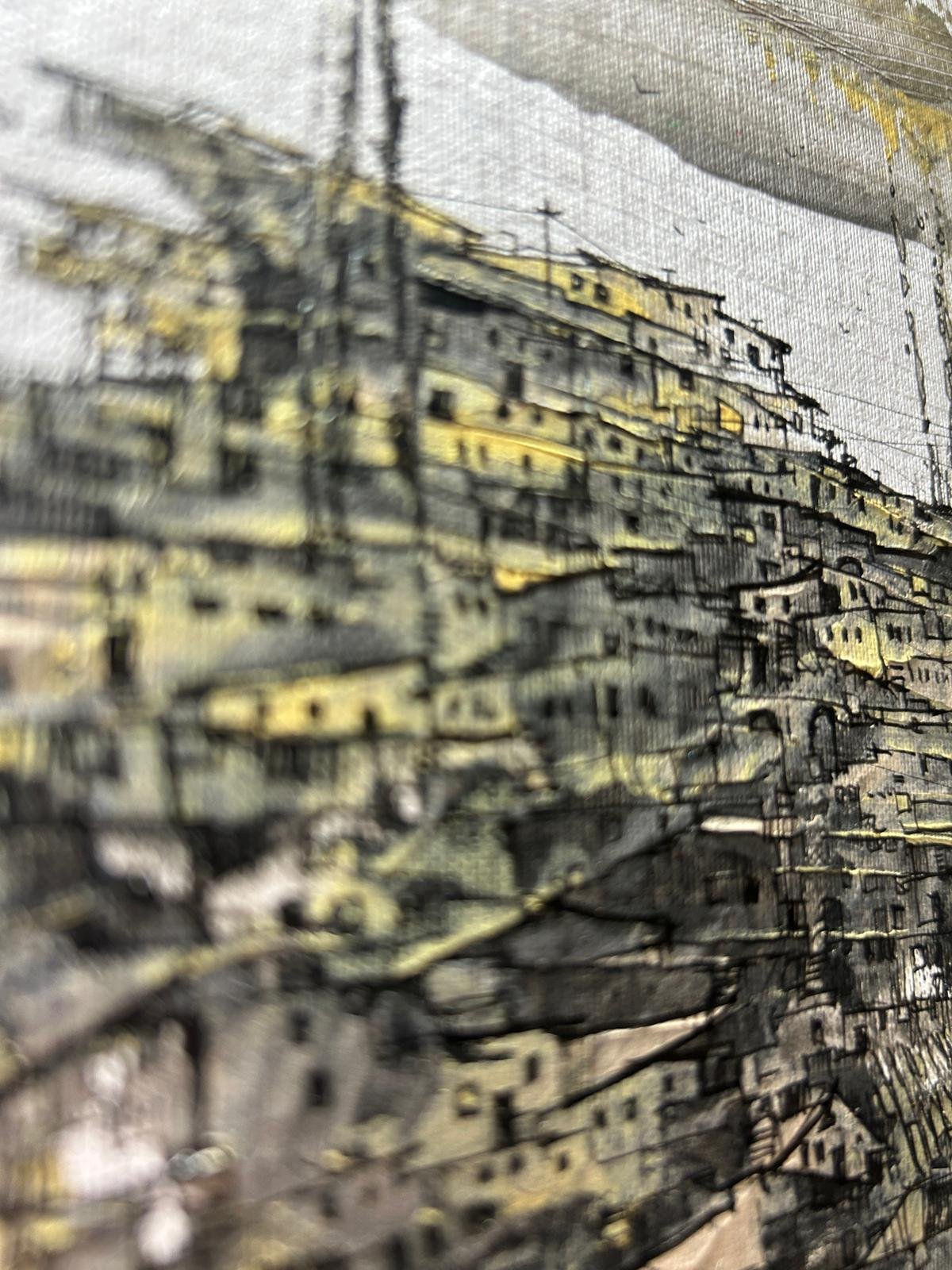
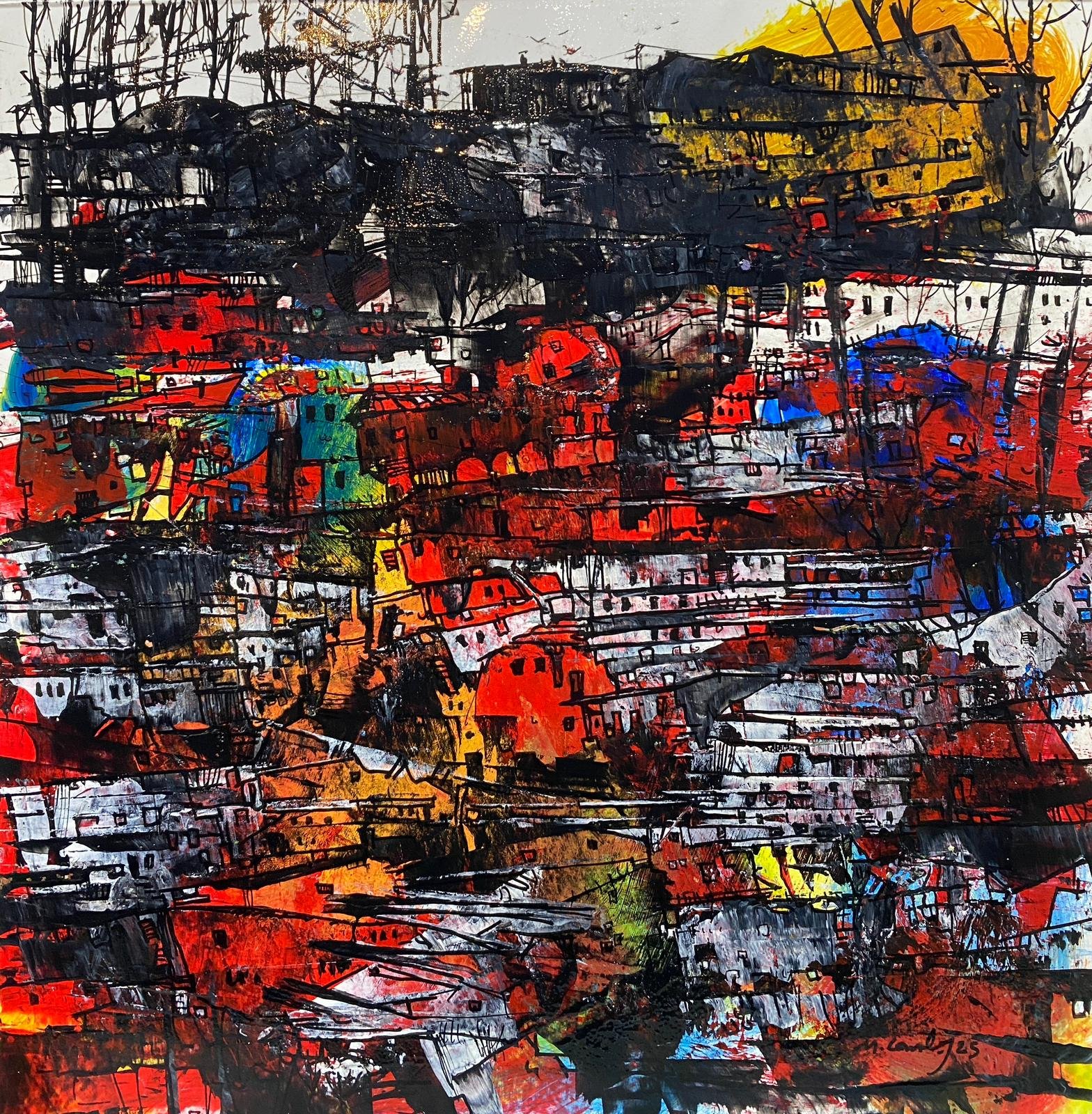
Mümin Candaş uses black as a metaphor for human transience in nature. His “Barınaklar” (Shelters) series revives abandoned structures through charcoal and ink’s dark tones. The deliberate exclusion of human figures pushes viewers to contemplate “spiritual depth.”
Technical and Thematic Contrasts
Zafer’s method relies on intuitive beginnings: “I face the blank canvas seeking an entry point.” He transforms experimental “errors” into art, exemplified by his acrylic “Don Quixote” series.
Candaş follows systematic research: photographing historic workshops, documenting sites with watercolor/charcoal, then transmuting them into “shadows of time.” His pursuit of physical-spiritual depth materialized through 61 works in his Gaziantep exhibition.
Educator Identities and Anatolian Impact
Both artists teach at fine arts high schools, expanding art’s reach across Anatolia. Zafer chairs the Painting Department at Ordu Fine Arts High School, while Candaş mentors young talents in Trabzon’s Akçaabat district.
This mission informs their exhibitions. Zafer declares, “Art education should begin young,” viewing galleries as “learning spaces.” Candaş paints historic structures to “preserve history.”
Cultural Reflections of the Exhibition
“Blue and Black” represents not just aesthetics but cultural dialogue. Zafer’s emphasis on “local to universal” and Candaş’s exploration of “geographic chromaticity” illuminate Anatolia’s multilayered identity.
Hosting Black Sea artists in Urla—an Aegean town—reflects Turkey’s cultural mosaic. Per curator Karaoğlu, the exhibition offers “a thought space facing both inward and outward,” guiding viewers between individual and collective memory.
References
- Trabzonlu ressamlar, Gaziantep’te sergi açtı – Timeturk Haber
- SANKO Sanat Galerisi’nde “barınaklar” temalı resim sergisi İhlas Haber Ajansı
- Mavinin ressamı | Uğur Ergan Köşe Yazısı – Hürriyet Haberler
- T.C. MİLLÎ EĞİTİM BAKANLIĞI ORDU / ALTINORDU / Penbe-İzzet Şahin Güzel Sanatlar Lisesi
- Ressam Orhan Zafer SANKO Sanat Galerisi’nde sergi açacak
- SANKO Sanat Galerisi’nde ‘Barinaklar’ Temali Resim Sergisi – Gaziantep